

Resources 
Product Resource
Learning
We Are Pleased to Announce: Global Commercial Licensing Rights for Jurkat E6.1, CHO-K1, HEK293, THP-1 and RAJI Cell Lines Officially Secured.
ExploreArticles

PDGFRA and PDGFRB Cell Models for Drug Discovery and Target Validation
PDGFRA and PDGFRB have a long history as drug-development targets. Their established biology can reduce mechanistic uncertainty, but the competitive landscape creates a high technical bar. Reliable tools remain important for data quality and batch consistency. When cell-based activity testing is part of a TKI release strategy, a well-characterized cell model is essential for generating consistent QC data. Reqbio developed this portfolio to provide coordinated tools for PDGFRA- and PDGFRB-focused drug development. The reporter cell models have been evaluated using ligands, receptor-blocking antibodies, and ligand-neutralizing antibodies to demonstrate the assay logic across these mechanisms.

Cell‑based Assay & Phenotypic Screening: Workflow, Advantages and CRO Service Solutions
Cell‑based assay occupies an irreplaceable position in modern preclinical drug discovery. It bridges the gap between molecular‑level biochemical experiments and in‑vivo animal studies. Selecting a qualified CRO partner with mature assay systems can greatly improve screening efficiency and data reliability. Contact our team to discuss your cell‑based screening project requirements.
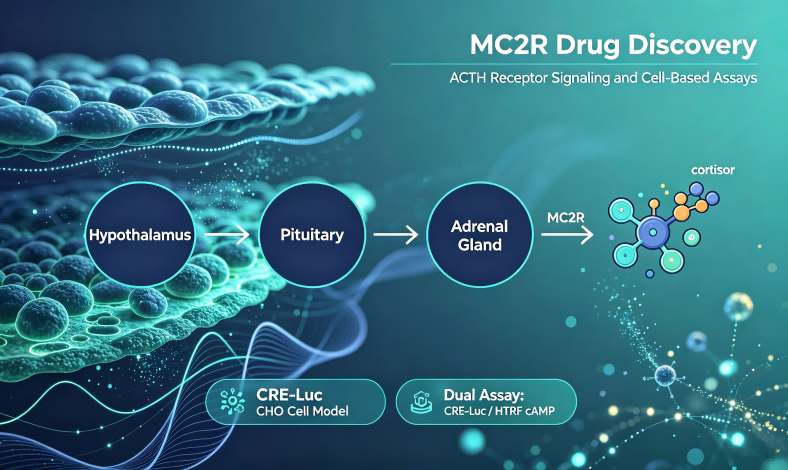
MC2R: A Core GPCR of the HPA Axis and Cell Models for Drug Screening
As the terminal effector receptor of the HPA axis, MC2R is an essential regulator of cortisol and therefore a core target for drug development in endocrine disorders. The advancement of Atumelnant into Phase III clinical development marks the transition of this target from basic research to clinical translation. The MC2R CRE-Luc CHO cell model offered by Reqbio provides drug developers worldwide with a precise, flexible, and cross-validatable evaluation tool through its dual CRE-Luc reporter and HTRF cAMP assay modes.
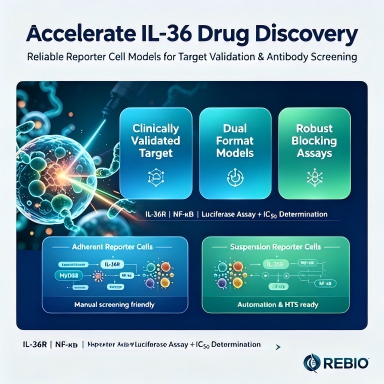
IL-36/IL-36R: A Rising Star in the Treatment of Pustular Psoriasis and Broad-Spectrum Inflammatory Diseases
The IL-36/IL-36R axis is a central IL-1 superfamily pathway regulating inflammation in barrier tissues, and the successful approval of Spesolimab has validated its clinical druggability. The range of indications under investigation continues to expand, from GPP and hidradenitis suppurativa to palmoplantar pustulosis and inflammatory bowel disease. With pathway-specific design, flexible experimental formats, and blocking validation, Reqbio's adherent and suspension IL-36 effector reporter cell models provide drug developers worldwide with reliable and efficient evaluation tools.
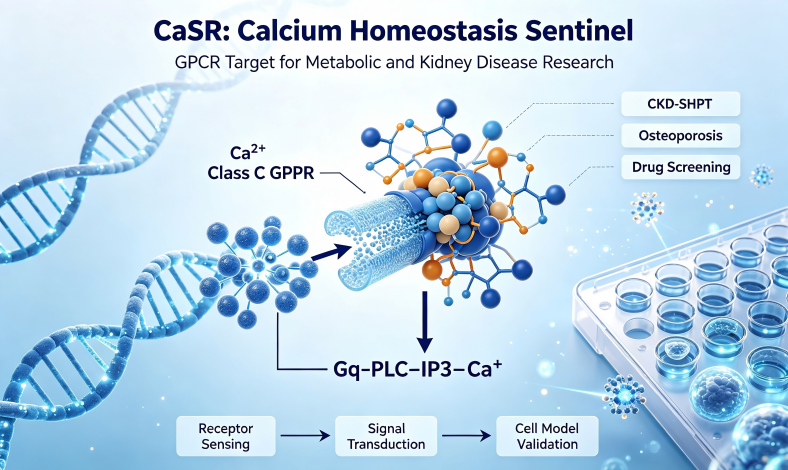
CaSR: The Calcium Homeostasis Sentinel and a Core GPCR Target for Metabolic and Kidney Disease Research
Reqbio offers three CaSR cell models spanning NFAT luciferase reporter and HTRF IP-One assay platforms, with both the broadly used HEK293 host. Together, these models provide drug discovery researchers with a precise, flexible, and cross-validatable set of evaluation tools. Through its cell engineering capabilities and high-precision gene-editing platform, Reqbio continues to provide drug screening cell models covering GPCRs, immunotherapy targets, kinases, and other target classes, together with high-quality cell-based bioassay services.
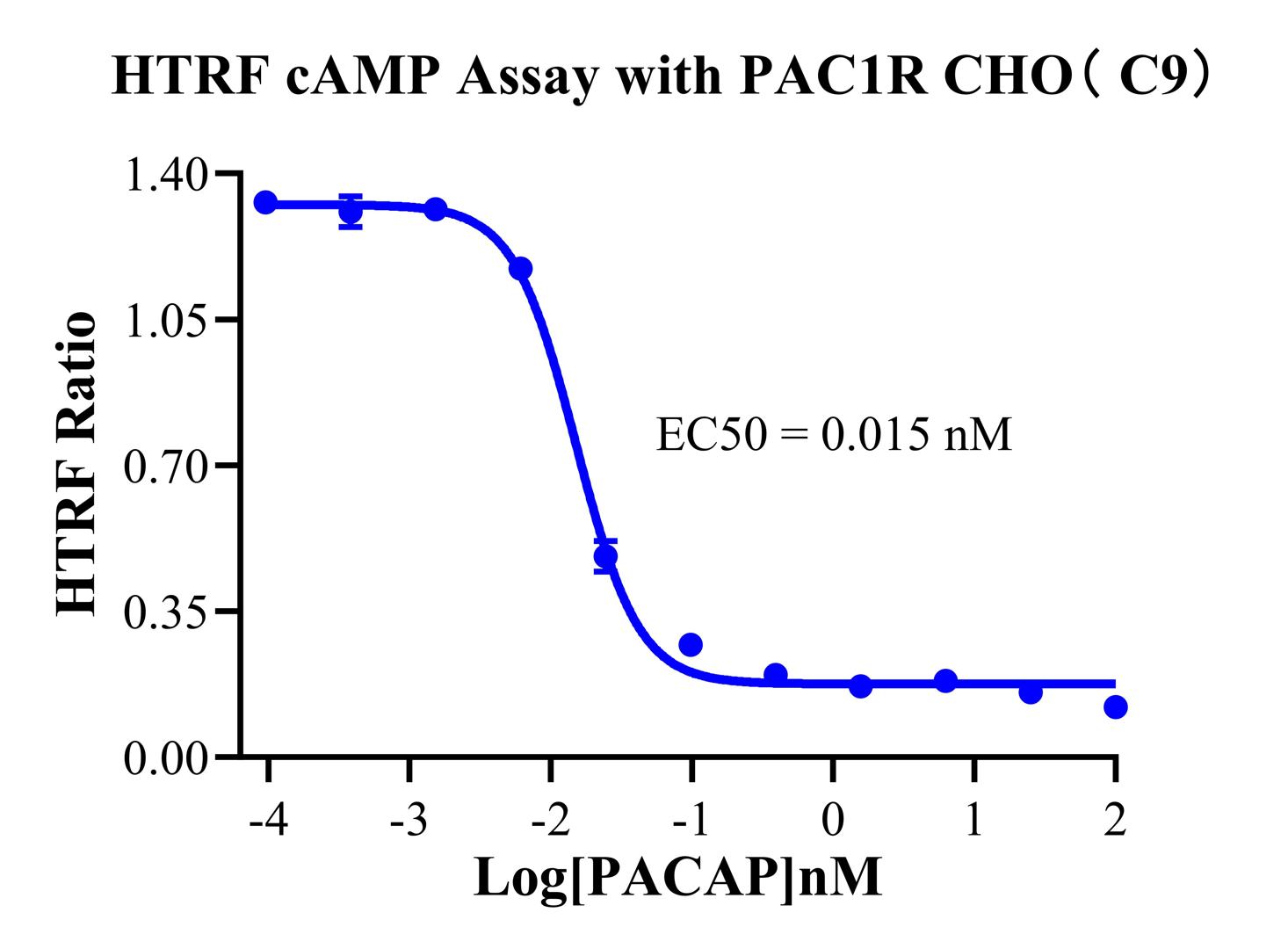
PAC1R Target: A Core GPCR and Cell Models for Neuromodulation, Pain, and Neuroprotection
With its extreme selectivity for PACAP, precise expression in the nervous system, and diverse downstream signaling network, PAC1R has become a highly attractive GPCR target in neuroscience drug development. From migraine to neuropathic pain and from stroke to neurodegenerative diseases, both PAC1R agonist and antagonist pathways have shown clear prospects for translation. The four PAC1R cell models launched by Reqbio—covering three major assay formats, namely the CRE-Luc reporter gene, HTRF cAMP quantification, and β-arrestin recruitment, together with HEK293 and CHO host backgrounds—provide drug developers worldwide with a complete, flexible, and reliable combination of evaluation tools.
