

Home>
Resources>
Learning>
Articles>
LTBR Cell Models – Reporter Cell Lines & CHO-K1 Cell Lines | Reqbio
LTBR Cell Models – Reporter Cell Lines & CHO-K1 Cell Lines | Reqbio
Product Overview
LTBR (TNFRSF3) Cell Models – Tools for Immunology Research
Lymphotoxin beta receptor (LTBR, also designated TNFRSF3) is a central member of the TNF receptor (TNFR) superfamily. It plays pivotal roles in secondary lymphoid organ (SLO) development, tertiary lymphoid structure (TLS) formation, and immune regulation, transducing signals through both the canonical and non-canonical NF-κB pathways. LTBR activation induces TLS formation by recruiting T and B cells via chemokines (CXCL13, CCL19), thereby enhancing anti-tumor immunity. However, aberrant LTBR activation can also drive immunosuppressive macrophage polarization and promote tumor progression, giving LTBR a dual functional role in immuno-oncology.
To support drug discovery targeting LTBR, Reqbio has developed two ready-to-use cell models:
1.LTBR Effector Reporter Cell Line (RQP74259) – A reporter cell line stably expressing human LTBR, enabling quantitative detection of LTBR agonist activity via luciferase readout.
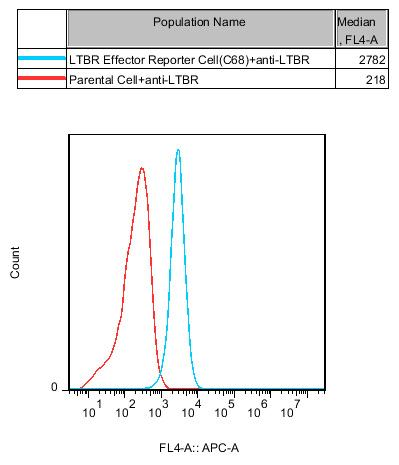
Figure 1. Recombinant LTBR Effector Reporter Cell stably expressing LTBR.
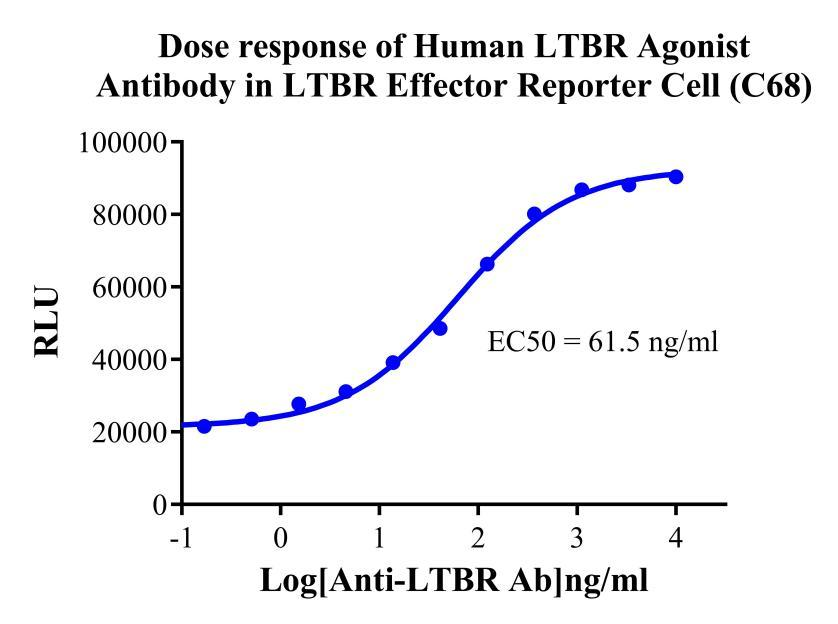
Figure 2. Dose Response of Human LTBR Agonist Antibody in LTBR Effector Reporter Cell (C68).
2.LTBR CHO-K1 Cell Line (RQP74447) – A CHO-K1 stable cell line expressing human LTBR, suitable for binding studies, cell-based analyses, and ligand/receptor interaction research.
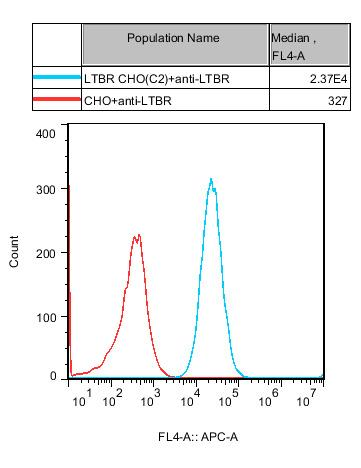
Figure 3. Recombinant LTBR CHO stably expressing LTBR.
For research use only. Not for use in diagnostic procedures. These cell models are intended exclusively for drug screening, mechanistic research, and assay development.
Product Features
Stable Expression – Both cell lines stably express full-length human LTBR (TNFRSF3), with surface expression confirmed by flow cytometry (Figures 1 and 3).
Functional Reporter System – The LTBR Effector Reporter Cell Line incorporates an NF-κB-driven luciferase reporter gene for quantitative measurement of agonist activity (Figure 2, dose–response curve).
CHO-K1 Background Optimized for Binding Studies – The LTBR CHO-K1 cell line provides a clean, non-lymphoid background suitable for binding studies involving ligands (LTα1β2/LIGHT) or antibodies.
Validated Performance – Both cell lines have been validated using a human LTBR agonistic antibody; data are robust and reproducible (EC₅₀ values provided).
Ready-to-Use Format – Supplied as cryopreserved vials accompanied by detailed culture protocols and recommended assay conditions.
Customization Support – Co-development and custom cell line construction services are available upon request.
Applications
1. LTBR Agonist Screening for Immuno-Oncology Drug Discovery
Biopharmaceutical companies are actively developing LTBR agonists – including monospecific and bispecific antibodies such as RO7567132 and MST0312 – to induce TLS formation and potentiate the efficacy of immune checkpoint blockade (ICB). The LTBR Effector Reporter Cell Line provides a rapid, high-throughput screening platform for assessing LTBR agonist activity of candidate molecules. NF-κB pathway activation is measured by luciferase readout, enabling potency ranking to support lead optimization – all in a standard 96-well or 384-well plate format.
2. Binding and Functional Characterization of LTBR Antibodies
For investigators developing FAP×LTBR bispecific antibodies or other LTBR-directed biologics, the LTBR CHO-K1 Cell Line offers a clean, stable background for binding studies. The platform supports flow cytometry-based binding assays, competitive binding experiments, and internalization studies. The CHO-K1 background eliminates interference from endogenous immune receptors, ensuring specificity in measuring LTBR engagement. Functional characterization using the reporter cell line confirms whether binding translates into pathway activation.
3. LTBR Signaling Mechanism Studies and Combination Therapy Exploration
Understanding the dual role of LTBR – pro-tumorigenic versus anti-tumorigenic – requires robust cellular tools. The LTBR cell lines can be used to investigate canonical versus non-canonical NF-κB pathway activation in response to ligand or antibody stimulation. LTBR agonists can be combined with ICB agents (e.g., anti-PD-1/PD-L1) in co-culture systems with immune cells to evaluate synergistic effects on TLS-associated chemokine production. These models support translational research on LTBR-mediated TLS induction and tumor microenvironment (TME) remodeling.
Why Reqbio
• Specialized Cell Line Development Expertise – Reqbio specializes in stable cell lines and reporter systems for drug discovery, with an established product portfolio spanning multiple immune targets.
• Validated Functional Assays – Each cell line is validated by dose–response analysis with an agonist or ligand, ensuring consistency across lots.
• Comprehensive Technical Documentation – Detailed SOPs, flow cytometry data, and validation reports are provided.
• Flexible Collaboration Models – Custom cell line construction, co-development, and exclusive licensing options are available.
• Technical Support – Complimentary pre-sales and post-sales technical consultation is offered to assist with assay setup and data interpretation.
• For Research Use Only – All products are intended solely for non-clinical research applications.
Frequently Asked Questions (FAQ)
1. What is the difference between the LTBR Effector Reporter Cell Line and the LTBR CHO-K1 Cell Line?
The Reporter Cell Line (RQP74259) contains an NF-κB-driven luciferase reporter and provides a functional, quantitative readout of LTBR agonist activity. The CHO-K1 Cell Line (RQP74447) stably expresses surface LTBR but contains no reporter construct, making it well suited for binding studies, antibody screening, and cell-based interaction analyses.
2. Have these cell lines been validated with known LTBR agonists?
Yes. Both cell lines have been validated using a human LTBR agonistic antibody. The reporter cell line demonstrates a clear dose-dependent luciferase response (Figure 2), and stable surface expression in the CHO-K1 cell line has been confirmed by flow cytometry (Figures 1 and 3).
3. What types of experiments is the LTBR Effector Reporter Cell Line suitable for?
The cell line is suitable for agonist screening (e.g., LTBR antibodies, bispecific molecules, or ligand mimetics), potency ranking, lot-release testing of biologics, and pathway mechanism studies using NF-κB inhibitors as controls.
4. Can these cell lines be used in in vivo experiments?
No. These cell lines are intended exclusively for in vitro research use and have not been validated for animal studies. Please contact us to discuss customized in vivo model options if needed.
5. How can I obtain a quotation or technical documentation?
Please email sales@reqbio.com or visit our website. Complimentary technical consultation is available.


news recommendation
CaSR: The Calcium Homeostasis Sentinel and a Core GPCR Target for Metabolic and Kidney Disease Research
CD3E: The T-Cell Activation Switch and Cell Models for Targeted Therapeutics
NFAT Signaling Pathway: A Critical Target for Drug R&D and Cell Models
TSHR Cell Model for Thyroid Cancer Drug Screening | GPCR Assay Platform-Reqbio
We Are Pleased to Announce: Global Commercial Licensing Rights for Jurkat E6.1, CHO-K1, HEK293, THP-1 and RAJI Cell Lines Officially Secured.
Explore