

Home>
Resources>
Learning>
Articles>
TRKA Target: A Dual Engine Bridging Neural Regulation and Pan-Cancer Therapy
TRKA Target: A Dual Engine Bridging Neural Regulation and Pan-Cancer Therapy
Among the receptor tyrosine kinase (RTK) family, TRKA (encoded by the NTRK1 gene) is a uniquely versatile molecule. It functions not only as the high-affinity receptor for nerve growth factor (NGF), regulating neuronal development, survival, and pain perception, but also as a critical oncogenic driver in multiple solid tumors. Gene fusion or overexpression of TRKA can directly promote tumor proliferation, invasion, and metastasis. This dual role in both neuroscience and oncology has established TRKA as a highly attractive therapeutic target, supporting the development of small-molecule inhibitors, monoclonal antibodies, PROTACs, and peptide therapeutics.
Leveraging its advanced cell engineering platform, Reqbio has successfully developed human and canine NGF/TRKA effector reporter cells as well as TRKA CHO-K1 overexpression cell models, providing researchers worldwide with efficient tools for agonist, antagonist, inhibitor, and neutralizing antibody screening.
I. TRKA: A Molecular Hub Connecting Neuroscience and Oncology
TRKA is a central member of the neurotrophin receptor (Trk) family. Its primary high-affinity ligand is nerve growth factor (NGF), although it can also bind NT-3 with lower affinity, often in cooperation with the p75NTR co-receptor to fine-tune signaling responses.
Under physiological conditions, TRKA activation primarily occurs in an NGF-dependent manner, triggering three major signaling pathways:
• RAS-MAPK pathway (proliferation and differentiation)
• PI3K-AKT pathway (cell survival and anti-apoptosis)
• PLCγ pathway (synaptic plasticity and pain signaling)
These pathways play indispensable roles in neuronal development, synaptic plasticity, and nociceptive signal transmission.
In cancer, however, aberrant TRKA activation mainly arises through two mechanisms:
Gene Fusion:
Chromosomal rearrangements involving NTRK1 and partner genes such as TPM3 or TPR generate fusion proteins capable of ligand-independent dimerization and constitutive kinase activation. This forms the molecular basis for pan-cancer targeted therapy against NTRK fusion-positive tumors.
Protein Overexpression:
TRKA overexpression in various tumor types activates MAPK and PI3K signaling through ligand-dependent or ligand-independent mechanisms, promoting proliferation, epithelial-mesenchymal transition (EMT), perineural invasion (PNI), and drug resistance.
This dual physiological and pathological role makes TRKA an important therapeutic target not only for pain and dry eye disease, but also for tumor-agnostic targeted oncology therapies.
II. Structure and Signaling Mechanisms of TRKA
TRKA is a type I single-pass transmembrane glycoprotein composed of 796 amino acids and can be divided into three major structural domains:
|
Domain |
Composition |
Function |
|
Extracellular Domain(ECD) |
Ligand-binding region predominantly composed of the Ig2 domain |
Recognizes and binds to NGF, mediating receptor dimerization |
|
ransmembrane Domain (TMD) |
Single-pass transmembrane alpha-helix |
Anchors to the cell membrane and stabilizes dimerization |
|
Intracellular Domain (ICD) |
Contains a kinase domain and multiple phosphorylation sites (Y676/Y680/Y681 activation loop; Y496/Y791 docking sites) |
Undergoes autophosphorylation to activate kinase activity and recruits downstream signaling proteins |
Dual Models of Signal Activation
|
Activation Mode |
Mechanism |
Pathways |
Biological Effects |
|
Ligand-dependent |
NGF dimer binding →Receptor dimerization →Trans-autophosphorylation |
MAPK、PI3K、PLCγ |
Neuronal survival, differentiation, synaptic plasticity, and nociception (pain perception) |
|
Fusion gene-driven |
NTRK1 fusion (spontaneous dimerization) → Constitutive kinase activation |
MAPK, PI3K (Ligand-independent) |
Uncontrolled tumor proliferation, anti-apoptosis, invasion, and metastasis |
III. Drug Development Targeting TRKA: From Pan-Cancer Inhibitors to Peptide Agonists
Due to the dual biological role of TRKA, therapeutic development has evolved into a diversified landscape. In oncology, drug discovery mainly focuses on small-molecule kinase inhibitors targeting the ATP-binding pocket of TRKA fusion proteins. In neuroscience, efforts are concentrated on NGF/TRKA pathway-blocking antibodies for pain treatment and TRKA agonist peptides for ocular disorders such as dry eye disease.
Representative Approved Drugs for NTRK Fusion-Positive Solid Tumors
|
Drug Name |
Developer |
Targets |
Indications |
|
Larotrectinib Sulfate |
Loxo Oncology/Array |
pan-TRK |
NTRK fusion-positive solid tumors |
|
Entrectinib |
Nerviano Medical Sciences |
TRK/ROS1/ALK |
NTRK fusion-positive solid tumors |
|
Repotrectinib |
Turning Point Therapeutics |
TRK/ROS1/ALK |
NTRK fusion-positive solid tumors (including those with resistance mutations) |
|
Zurletrectinib |
InnoCare Pharma |
Pan-TRK |
NTRK fusion-positive solid tumors |
Selected Pipeline Candidates Bridging Neuroscience and Oncology:
|
Drug Name |
Developer |
Stage |
Type |
Target |
Indications |
|
Tavilermide |
Mimetogen |
Phase III |
Synthetic peptide |
TRKA (Agonist) |
Keratitis, dry eye disease |
|
AK-1830 |
Array BioPharma |
Phase II |
Small molecule |
TRKA |
Joint inflammation |
|
VM-902A |
VM Discovery |
Phase II |
Small molecule |
TRKA |
Pain |
|
VMD-928 |
VM Oncology |
Phase I/II |
Small molecule |
TRKA |
Adenoid cystic carcinoma (ACC), esophageal cancer, lymphoma |
IV. Accelerating TRKA Drug Discovery: Reqbio’s Integrated Cell Models and Data Advantages
Sensitive and specific detection systems are essential for TRKA-targeted drug screening and bioactivity evaluation, particularly for monitoring NGF-dependent receptor activation and inhibition by small molecules or neutralizing antibodies. To address these needs, Reqbio has developed three complementary TRKA cell models covering both human and canine species.
Reqbio’s TRKA Cell Model Portfolio
|
Cell Name |
Cat.No. |
Species |
Essay Model |
Key Applications |
|
HEK293 Human NGF/hTRKA Effector Reporter Cell |
RQP74174 |
Human |
Luciferase reporter assay |
Functional screening of human TRKA agonists, inhibitors, and NGF neutralizing antibodies (Figures 1, 2, 3) |
|
HEK293 Human NGF/Canine TRKA Effector Reporter Cell |
RQP74230 |
Canine |
Luciferase reporter assay |
Functional screening of canine TRKA agonists, inhibitors, and neutralizing antibodies (Figures 4, 5) |
|
CHO-K1 Human TRKA Cell |
RQP74508 |
Human |
Flow cytometry (FACS) |
Evaluation of antibody binding specificity and affinity determination (Figure 6) |
Validation Data and Advantages
1. HEK293 Human NGF/hTRKA Effector Reporter Cell(RQP74174)
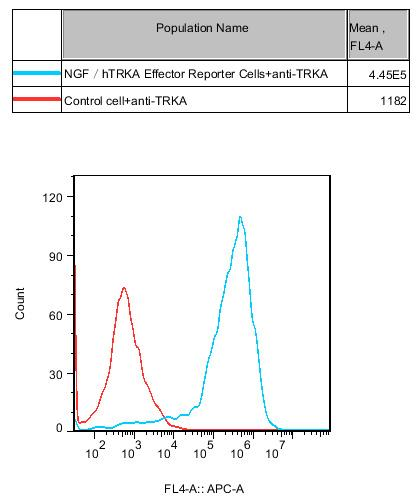
Figure 1:Confirmation of stable expression of human TRKA on the surface of reporter cells via flow cytometry (FACS) or Western blot, ensuring the reliability of the screening system.
Figure 2 (Core Functional Validation Data):
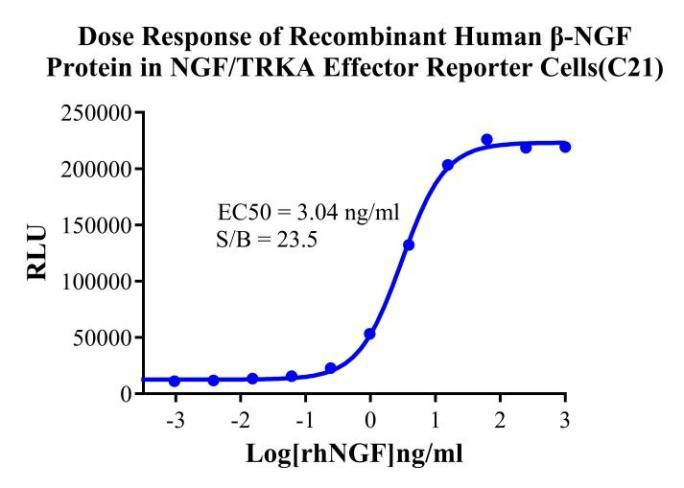
Assay Principle: Upon binding of recombinant human β-NGFprotein to TRKA on the cell surface, the downstream MAPK signaling pathway is activated. This pathway is coupled to a reporter gene system, driving the expression of luciferase.
Data Interpretation: As shown in the figure, human β-NGFexhibits a typical dose-dependent sigmoidal (S-shaped) activation curve. The EC50 is stably maintained at the picomolar (pM) level, featuring a wide signal window (greater than 10-fold) and low background.
Advantage Analysis:
- Physiological Relevance: Signaling is induced by natural ligand-receptor binding (NGF/TRKA), which more closely mimics in vivo mechanisms compared to artificial activation.
- High Sensitivity: The pM-level EC 50 enables the detection of extremely low concentrations of active ligands, making it ideal for bioprocess optimization and batch release testing.
- High-Throughput Compatibility: The luciferase reporter assay features a simple workflow and is easily adaptable to 384-well plates for high-throughput screening (HTS).
Figure 3(Dual-Blocking Validation):
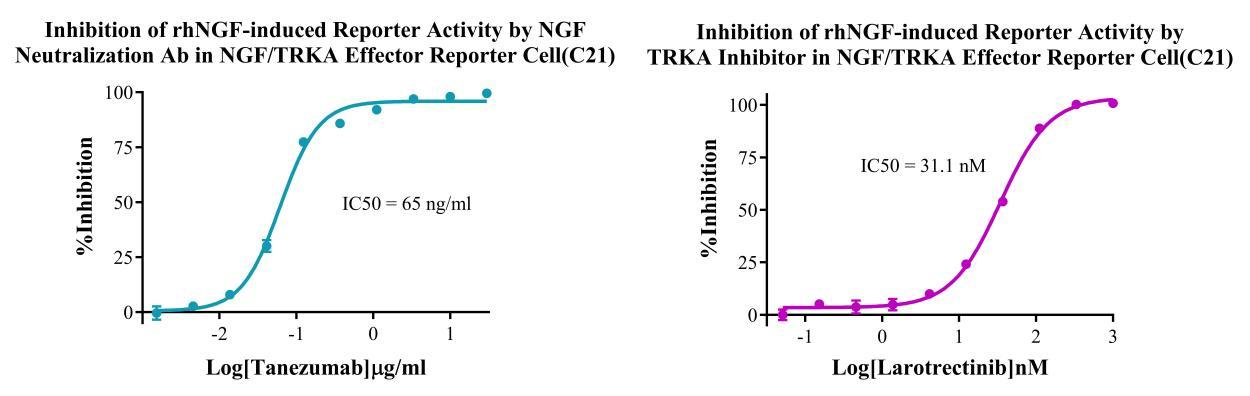
- Left Panel: An anti-NGF neutralizing antibody dose-dependently inhibits NGF-induced reporter gene activity, validating the model's utility for potency evaluation of anti-NGF neutralizing antibodies (e.g., anti-NGF antibodies for pain management).
- Right Panel: A small molecule TRKA inhibitor dose-dependently suppresses NGF-induced signaling, validating the model's utility for activity evaluation of TRKA kinase inhibitors (e.g., Larotrectinib analogs).
Advantage Analysis: This cell model can be simultaneously utilized for drug screening under two distinct mechanisms of action (MOA): ligand neutralization and receptor inhibition. It effectively covers two major therapeutic areas: neurology (anti-NGF) and oncology (TRKA inhibitors).
2. HEK293 Human NGF/Canine TRKA Effector Reporter Cell(RQP74230)
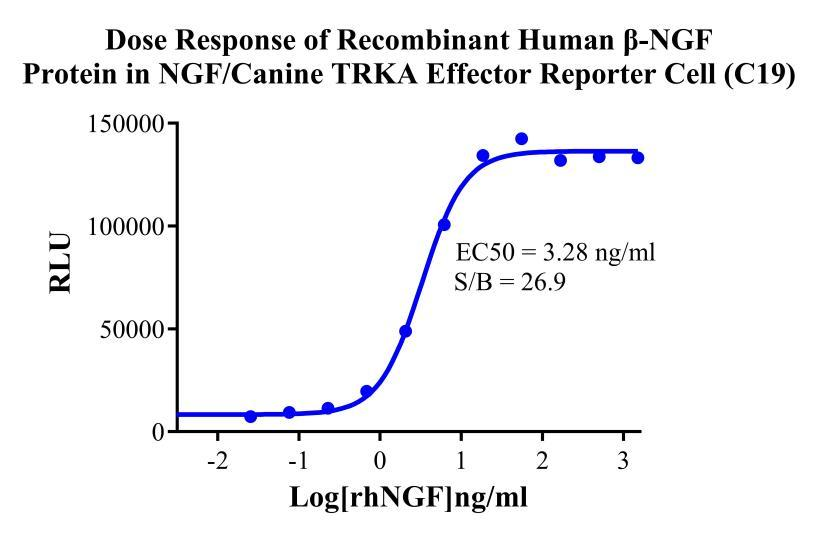
Figure 4:Recombinant human β-NGFsuccessfully activates canine TRKA reporter cells, displaying a dose-dependent activation curve. This demonstrates the model's suitability for cross-species cross-reactivity evaluation.
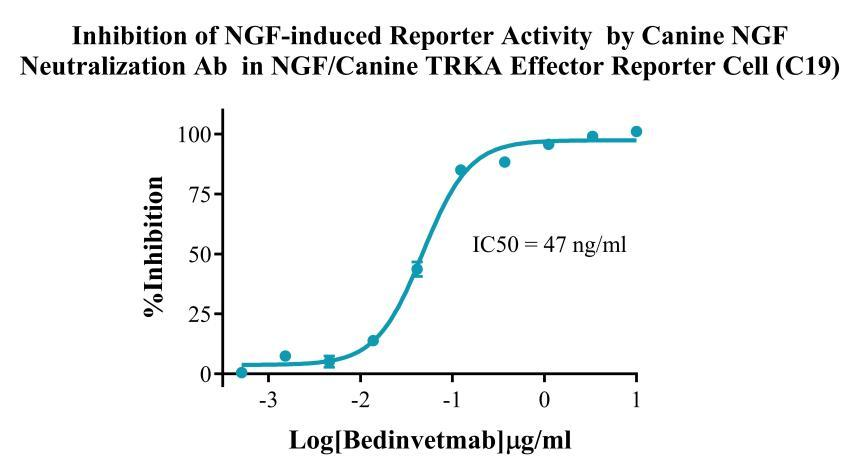
Figure 5:A canine NGF neutralizing antibody dose-dependently inhibits NGF-induced reporter gene activity.
Advantage Analysis:
- Species Differentiation: The canine-derived model is applicable for veterinary drug R&D (e.g., canine pain and arthritis treatments) as well as human/canine cross-reactivity profiling (critical for species selection in preclinical toxicology).
- Complementarity to Figures 2 & 3: Enables parallel evaluation of drug potency and selectivity against human and canine TRKA on the same technical platform.
3. CHO-K1 Human TRKA Cell(RQP74508)
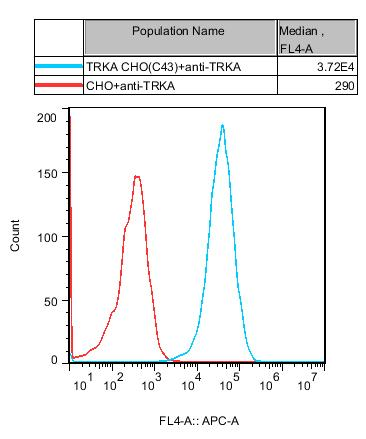
Figure 6:Figure 6: Flow cytometry (FACS) confirms stable high expression of TRKA on the surface of CHO-K1 cells (positive rate greater than 95%), showing a significant shift compared to the mock control.
Key Application:
- Antibody binding specificity screening (distinguishing TRKA from fellow family members TRKB and TRKC).
- Affinity determination (via FACS quantification, SPR, or ForteBio/BLI).
- Target binding validation for bispecific antibodies (BsAbs) or antibody-drug conjugates (ADCs).
- Advantage Analysis: Featuring high expression, a clean CHO-K1 parental background, and zero endogenous TRKA interference, this cell line serves as a standard binding evaluation tool for TRKA-targeting macromolecule biologics.
Core Product Advantages:
|
Dimensions of Strength |
Description |
|
Dual-Domain Target Value |
TRKA bridges pain/neurodegenerative disease research and pan-cancer targeted therapy, enabling broad application potential. |
|
Dual-Species Coverage |
Human and canine reporter cells support both human and veterinary drug development as well as cross-reactivity studies. |
|
Multiple Mechanism Compatibility |
The same reporter system can evaluate agonists, antagonists, and inhibitors simultaneously. |
|
High-Sensitivity Reporter System |
Picomolar EC50 values and wide dynamic range support bioactivity assays, batch release testing, and high-throughput screening. |
|
Integrated Model Portfolio |
The combination of reporter cells and overexpression cells covers both functional activity and binding specificity evaluation. |
|
Ready-to-Use |
All cell models undergo monoclonal selection and functional validation, enabling immediate use after recovery and reducing development timelines by 2–3 months. |
V. Typical Application Scenarios
- Screening of TRKA Small-Molecule Inhibitors:
- Potency Assays for Anti-NGF Neutralizing Antibodies:
- Cross-Species Selectivity Evaluation:
- Antibody Binding Specificity Validation:
- NGF Bioactivity Release Testing:
Conclusion
As a cross-disciplinary target connecting neuroscience and oncology, TRKA drug discovery has entered a stage where mature therapeutic strategies and frontier innovation coexist. Small-molecule inhibitors have achieved major breakthroughs in NTRK fusion-positive cancers, while NGF/TRKA pathway modulators continue to advance in pain management and dry eye disease treatment.
Reqbio’s human and canine NGF/TRKA effector reporter cells and TRKA CHO-K1 overexpression cells provide highly sensitive functional validation and flexible assay combinations, offering reliable and efficient tools for global drug discovery researchers.
Reqbio places strong emphasis on innovation in research and development. Through advanced cell engineering technologies and high-precision, flexible gene-editing platforms, Reqbio provides drug discovery cell models covering kinase targets, GPCRs, immunotherapy, drug resistance, and many other disease-related targets. The company currently offers more than 1,500 off-the-shelf cell models along with high-quality cell-based bioactivity assay services.


news recommendation
CaSR: The Calcium Homeostasis Sentinel and a Core GPCR Target for Metabolic and Kidney Disease Research
CD3E: The T-Cell Activation Switch and Cell Models for Targeted Therapeutics
NFAT Signaling Pathway: A Critical Target for Drug R&D and Cell Models
TSHR Cell Model for Thyroid Cancer Drug Screening | GPCR Assay Platform-Reqbio
We Are Pleased to Announce: Global Commercial Licensing Rights for Jurkat E6.1, CHO-K1, HEK293, THP-1 and RAJI Cell Lines Officially Secured.
Explore