

Home>
Resources>
Learning>
Articles>
MC2R: A Core GPCR of the HPA Axis and Cell Models for Drug Screening
MC2R: A Core GPCR of the HPA Axis and Cell Models for Drug Screening
Within the G protein-coupled receptor (GPCR) superfamily, melanocortin 2 receptor (MC2R, also known as ACTHR) is widely recognized as a distinctive member. It is the only subtype specifically activated by adrenocorticotropic hormone (ACTH) and directly serves as the primary control point for cortisol secretion in humans. As the terminal effector receptor of the hypothalamic-pituitary-adrenal (HPA) axis, abnormal MC2R function directly leads to severe endocrine disorders, including Cushing's disease (cortisol excess), congenital adrenal hyperplasia (CAH), and familial glucocorticoid deficiency (FGD). In recent years, with the oral small-molecule MC2R antagonist Atumelnant entering Phase III clinical development, MC2R has become a major target for innovative endocrine drug development. Leveraging its established GPCR drug screening platform, Reqbio has successfully developed an MC2R CRE-Luc CHO cell model to provide researchers worldwide with an efficient and reliable tool for targeted drug screening.
I. MC2R: The Terminal Effector of the HPA Axis
MC2R is a class A G protein-coupled receptor composed of seven transmembrane helices, and its gene is located at 18p11.21 on human chromosome 18. Unlike the other melanocortin receptors (MC1R-MC5R), MC2R has extremely high ligand selectivity: it responds only to ACTH activation and does not respond to melanocortin ligands such as alpha-MSH. This specificity gives MC2R an irreplaceable role in the HPA axis.
However, normal MC2R function depends on a unique accessory protein, melanocortin 2 receptor accessory protein 1 (MRAP1). As an antiparallel homodimer, MRAP1 assists the proper folding of MC2R, mediates receptor trafficking from the endoplasmic reticulum to the adrenocortical cell membrane, and participates in ligand recognition and signal transduction. In the absence of MRAP1, MC2R cannot reach the cell membrane, resulting in familial glucocorticoid deficiency (FGD). This receptor-accessory protein partnership makes MC2R highly distinctive within the GPCR family.
Associations Between MC2R Function and Disease:
|
Status |
Cortisol Level |
Associated Disease |
|
Receptor inactivation |
Cortisol deficiency |
Familial glucocorticoid deficiency (FGD) |
|
Receptor overactivation |
Cortisol excess |
Cushing's disease; congenital adrenal hyperplasia (CAH) |
II. MC2R Signal Transduction: The ACTH-Triggered Cascade
After ACTH (the 1-39 peptide) binds to the MC2R-MRAP1 complex, the receptor couples to Gs protein and activates adenylyl cyclase (AC), rapidly increasing intracellular cAMP levels and subsequently activating protein kinase A (PKA). PKA phosphorylates the downstream transcription factor CREB, initiating transcription of steroidogenic acute regulatory protein (StAR) and multiple steroidogenic enzymes, such as CYP11A1 and CYP21A2, and ultimately driving cortisol synthesis and release.
The ACTH-MC2R-cAMP-PKA-CREB axis is the central signaling pathway governing cortisol secretion by the adrenal cortex. Intracellular cAMP accumulation is a key node in this signaling axis; therefore, quantitative cAMP measurement and CREB transcriptional activity reporter systems are the gold-standard approaches for evaluating MC2R activity.
III. MC2R-Targeted Drug Development: Agonist and Antagonist Strategies
MC2R drug development is divided into two major directions, each precisely aligned with different disease needs:
|
Development Direction |
Mechanism of Action |
Primary Indication |
Representative Drug |
|
Antagonist |
Blocks ACTH signaling and reduces cortisol |
Cushing's disease; CAH |
Atumelnant (Phase III) |
|
Agonist |
Mimics ACTH and supplements cortisol |
Adrenal insufficiency |
KKD-001 (Phase I) |
Representative Investigational Pipelines:
|
Drug Name |
Developer |
Stage |
Modality |
Drug Target |
Indication |
|
Atumelnant (CRN04894) |
Crinetics Pharmaceuticals (acquired by Vertex Pharmaceuticals) |
Congenital adrenal hyperplasia (CAH): Phase III; ACTH-dependent Cushing's syndrome: Phase I/IIb |
Oral small molecule |
MC2R (melanocortin 2 receptor/ACTH receptor) |
Congenital adrenal hyperplasia (CAH); ACTH-dependent Cushing's syndrome |
|
OMS1620 |
OMass Therapeutics |
Preclinical (IND preparation stage) |
Small molecule |
MC2R (melanocortin 2 receptor/ACTH receptor) |
Congenital adrenal hyperplasia (CAH); Cushing's syndrome |
|
KKD-001 |
Shangrao Kangkede Biotechnology Co., Ltd. |
Phase I |
Recombinant peptide biologic |
MC2R (melanocortin 2 receptor/ACTH receptor) |
Proteinuria; multiple sclerosis |
|
MC2R Antagonist (Pfizer) |
Pfizer; Medical Research Council (MRC) |
Discontinued (preclinical) |
Small molecule |
MC2R (melanocortin 2 receptor/ACTH receptor) |
Cushing's syndrome |
Analysis of R&D Trends:
Oral small molecules predominate: MC2R antagonists are primarily oral small molecules, overcoming the limitations of injectable administration and substantially improving patient adherence.
Highly focused indications: The principal indications are clearly concentrated on diseases associated with cortisol excess (Cushing's disease and CAH), with well-defined disease mechanisms and clinical endpoints.
Accelerating clinical validation: Atumelnant has entered Phase III clinical development for CAH and is the MC2R-targeted candidate closest to market approval.
IV. Accelerating MC2R-Targeted Drug Development: Reqbio Cell Models and Data Advantages
In GPCR drug screening, the cAMP signaling pathway is a core indicator for assessing the activity of Gs-coupled receptors. Reqbio has developed an MC2R CRE-Luc CHO cell model that supports two assay modes in the same cell line, providing flexibility for the needs of different stages of drug development.
Reqbio MC2R Cell Model:
|
Cell Line Name |
Catalog No. |
Host Cell |
Assay Mode |
Signaling Pathway |
Primary Applications |
|
CHO-K1 Human MC2R CRE-Luc Cell Line |
RQP71631 |
CHO-K1 |
CRE-Luc reporter assay & HTRF cAMP |
Gs-cAMP-CREB |
Agonist screening, antagonist screening, and bioactivity assays (Figures 1 and 2) |
Validation Data and Analysis of Advantages:
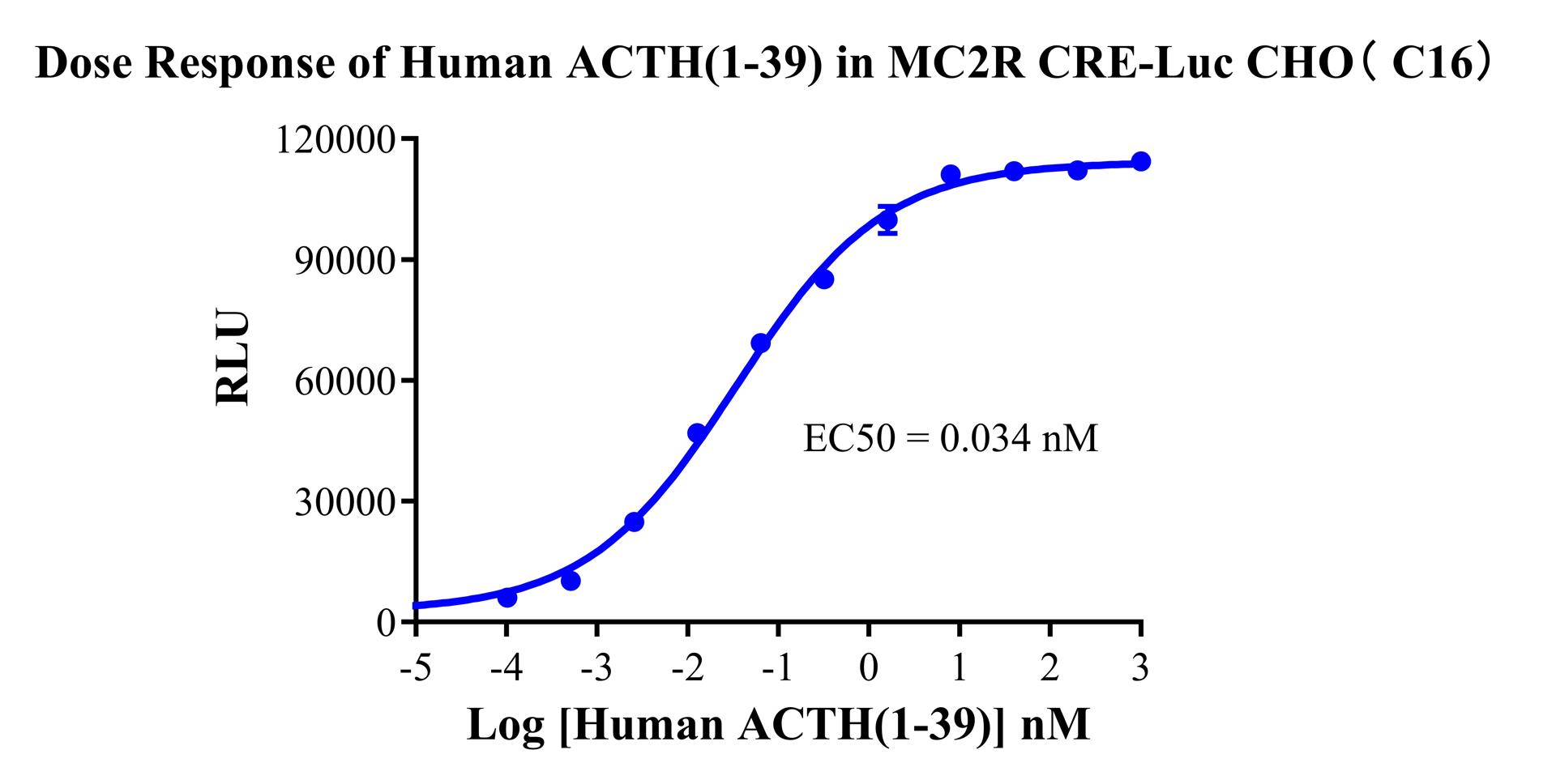
Figure 1. Dose Response of Human ACTH (1-39) in MC2R CRE-Luc CHO (C16)
Detection Principle: Following MC2R activation, the receptor couples to Gs protein, leading to increased cAMP, PKA activation, CREB phosphorylation, and expression of luciferase downstream of the CRE response element. Luciferase activity is positively correlated with the ACTH concentration.
Data Interpretation: Human ACTH (1-39) produces a typical dose-dependent sigmoidal activation curve, with a stable EC₅₀, a wide signal window (typically >10-fold), and low background signal.
Advantages:
Signal amplification: The reporter gene assay converts the cAMP signal into an enzymatic luminescence reaction, providing substantial signal amplification and higher sensitivity.
Simple workflow: The assay requires only sample addition, incubation, and plate reading, with no additional detection kit required, resulting in lower cost.
High-throughput compatibility: Compatible with 96- and 384-well plates and suitable for large-scale compound library screening.
Endpoint readout: The signal is stable and the readout window is broad, making the assay suitable for batch testing.
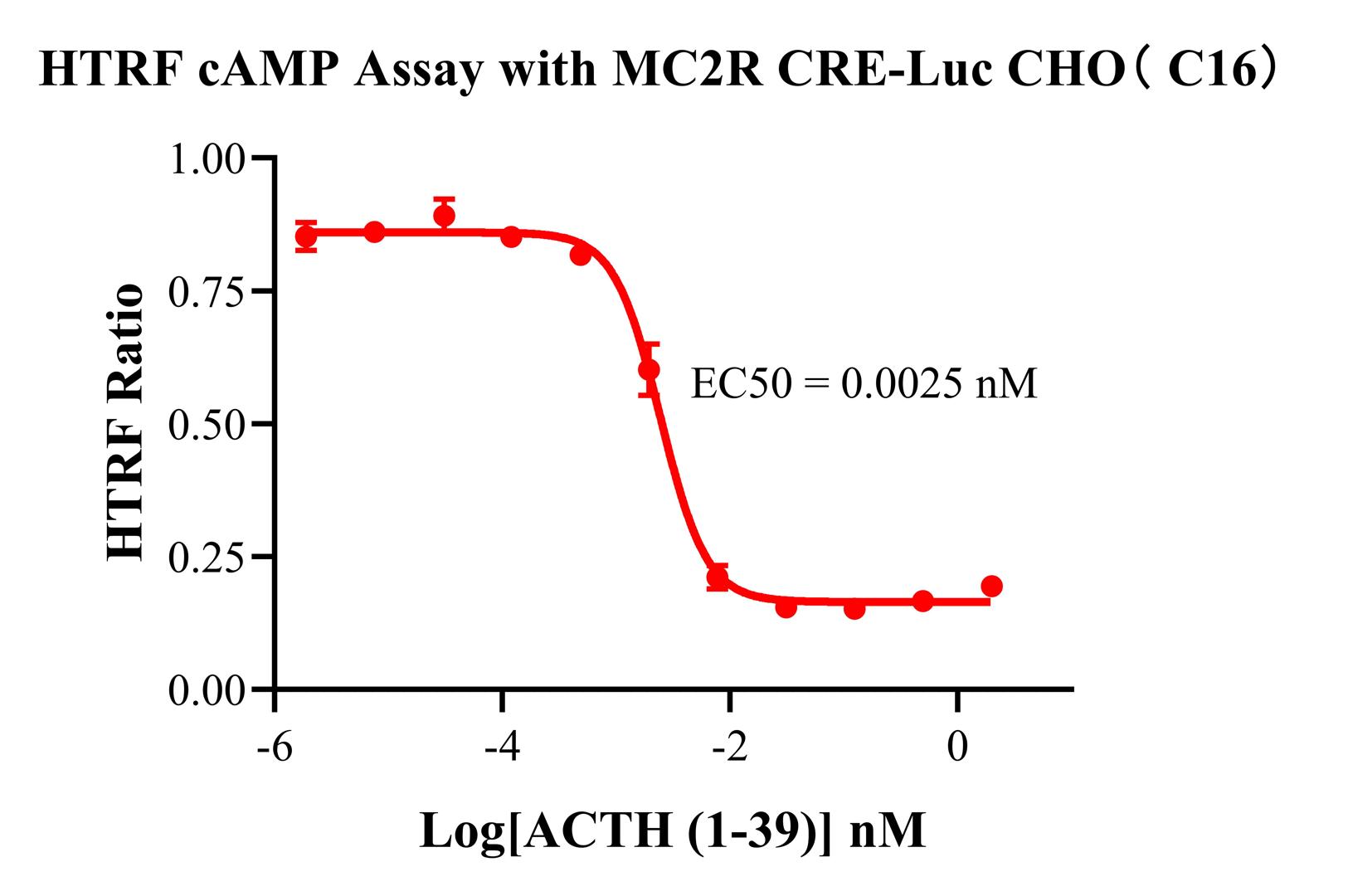
Figure 2. HTRF cAMP Assay
Detection Principle: Homogeneous time-resolved fluorescence (HTRF) technology is used to directly quantify intracellular cAMP levels. Following ACTH stimulation, cAMP in the cell lysate competes with labeled cAMP for antibody binding, and the fluorescence signal is inversely proportional to the cAMP concentration.
Data Interpretation: ACTH increases intracellular cAMP concentrations in a dose-dependent manner, enabling precise calculation of EC₅₀ and the maximum effect.
Advantages:
Gold-standard quantification: The HTRF cAMP assay is the most direct and precise quantitative method for studying the GPCR-Gs pathway.
Homogeneous, wash-free format: The workflow is straightforward and requires no washing steps, reducing operational error.
High temporal resolution: The assay can capture immediate signaling events and reflect the early response to receptor activation.
Complementary validation: Together with the CRE-Luc reporter assay, it forms a complementary validation system combining an upstream immediate signal with a downstream transcriptional readout.
Combined Advantages of the Two Assay Modes:
|
Comparison Parameter |
CRE-Luc Reporter Assay |
HTRF cAMP |
|
Detection Level |
Downstream transcriptional event (signal amplification) |
Upstream second messenger (primary signal) |
|
Sensitivity |
Very high (enzymatic amplification) |
High (HTRF technology) |
|
Workflow Complexity |
Simple (one-step sample addition) |
Simple (homogeneous, wash-free) |
|
Assay Time |
3-5 hours (including incubation) |
1-2 hours |
|
Applications |
High-throughput screening; potency comparison |
Precise EC₅₀/IC₅₀ determination; mechanism validation |
|
Recommended Kit |
Ultra Luciferase Detection Kit CBPH0001 |
HTRF cAMP Assay Kit |
Summary of Core Product Advantages:
|
Advantage |
Description |
|
High clinical interest in the target |
MC2R is a validated GPCR target in endocrinology. Atumelnant has entered Phase III clinical development, with a clear path toward drug development. |
|
Flexible switching between two modes |
The same cell line is compatible with both the CRE-Luc reporter assay and HTRF cAMP assay, providing flexibility for different research objectives. |
|
Precise pathway alignment |
Designed around the native Gs-cAMP-CREB signaling axis, fully matching the physiological signaling mechanism of MC2R. |
|
Clean CHO host background |
CHO cells do not express endogenous melanocortin receptors, ensuring the specificity and reliability of assay results. |
|
Highly specific ligand response |
Responds only to ACTH (1-39), with no response to alpha-MSH or similar ligands, providing high physiological relevance and direct utility for evaluating selective compounds. |
|
Ready-to-use product |
Following monoclonal selection and functional validation, the cells are ready for use after recovery. |
V. Typical Applications
MC2R antagonist screening (Cushing's disease/CAH): Using a fixed concentration of ACTH as the stimulation background, CRE-Luc or cAMP assay modes can be used to screen oral small-molecule compounds that block MC2R signaling, such as analogs or improved derivatives of Atumelnant.
MC2R agonist screening (adrenal insufficiency): The CRE-Luc reporter assay can be used to screen synthetic peptides or small molecules that mimic ACTH-mediated MC2R activation for cortisol replacement therapy.
Activity comparison of ACTH analogs: This model can be used to assess the relative potency of different ACTH fragments or analogs and guide peptide drug optimization.
Bioactivity assay: ACTH can be used as the reference standard for quality control of the inter-batch bioactivity of MC2R-targeted drugs.
Compound selectivity assessment: Candidate compound subtype selectivity can be evaluated through parallel comparison with cell models for other melanocortin receptors, such as MC1R.
VI. Conclusion
As the terminal effector receptor of the HPA axis, MC2R is an essential regulator of cortisol and therefore a core target for drug development in endocrine disorders. The advancement of Atumelnant into Phase III clinical development marks the transition of this target from basic research to clinical translation. The MC2R CRE-Luc CHO cell model offered by Reqbio provides drug developers worldwide with a precise, flexible, and cross-validatable evaluation tool through its dual CRE-Luc reporter and HTRF cAMP assay modes.
Contact us today to obtain detailed technical specifications for the MC2R cell model!


news recommendation
CaSR: The Calcium Homeostasis Sentinel and a Core GPCR Target for Metabolic and Kidney Disease Research
CD3E: The T-Cell Activation Switch and Cell Models for Targeted Therapeutics
NFAT Signaling Pathway: A Critical Target for Drug R&D and Cell Models
TSHR Cell Model for Thyroid Cancer Drug Screening | GPCR Assay Platform-Reqbio
We Are Pleased to Announce: Global Commercial Licensing Rights for Jurkat E6.1, CHO-K1, HEK293, THP-1 and RAJI Cell Lines Officially Secured.
Explore