

Home>
Resources>
Learning>
Articles>
NFAT Signaling Pathway: A Critical Target for Drug R&D and Cell Models
NFAT Signaling Pathway: A Critical Target for Drug R&D and Cell Models
What is the NFAT Signaling Pathway?
Nuclear Factor of Activated T-cells (NFAT) is a family of key transcription factors specific to vertebrate signaling pathways. Originally discovered in the immune system for its binding to the Interleukin-2 (IL-2) promoter region, it regulates T-cell activation and differentiation.
The NFAT family consists of five members:
NFAT1 (NFATc2/NFATp)
NFAT2 (NFATc1/NFATc)
NFAT3 (NFATc4)
NFAT4 (NFATc3/NFATx)
NFAT5(TonEBP/OREBP)
These factors play diverse regulatory roles across the hematopoietic, skeletal, cardiac, and neuronal systems.
Clinically, NFAT pathway inhibitors such as Cyclosporine A (CsA) and FK506 have been widely utilized in preventing and treating organ transplant rejection. Recent studies further reveal that aberrant NFAT signaling is closely linked to the malignant progression of various cancers, including melanoma, breast cancer, glioma, and diffuse large B-cell lymphoma. This has established NFAT as a promising emerging target for oncology therapy.
Core Mechanism of the NFAT Signaling Pathway
Classical Activation Pathway The activity of NFAT proteins is strictly regulated through the following steps:
- Cytoplasmic Retention: NFAT remains sequestered in the cytoplasm when serine residues in the SRR and SP regions are highly phosphorylated.
- Calcium Signal Activation: Activation of T-cell receptors (TCRs), receptor tyrosine kinases (RTKs), or G-protein coupled receptors (GPCRs) triggers intracellular calcium release via the PLC-IP3 pathway.
- Calcineurin-Mediated Nuclear Translocation: Calcium binds to calmodulin, activating calcineurin. This phosphatase dephosphorylates NFAT, exposing its nuclear localization signal (NLS) and facilitating nuclear entry.
- Transcriptional Regulation: Once in the nucleus, NFAT works synergistically with other transcription factors (such as AP-1) to regulate target gene expression.
The Distinctiveness of NFAT5
Unlike the classical NFAT1-4, NFAT5 is independent of calcineurin activation. It plays a unique role in physiological processes such as osmotic pressure regulation.
Professional Tools for NFAT-Targeted Drug R&D: Reqbio Cell Models
To accelerate drug screening and mechanism research for NFAT targets and related signaling pathways, Reqbio has developed a series of NFAT reporter gene cell models. These models provide a high-efficiency and reliable R&D platform for both pharmaceutical enterprises and research institutions.
1. Jurkat E6.1 Human NFAT-Luc (Cat No. RQP74025)
- Application Scenarios: T-cell immunotherapy and immunosuppressant screening.
- Validation Data: Stimulation with PMA/Ionomycin significantly activates NFAT reporter gene expression.
- Featured Application: Successfully utilized in dose-response studies for immunotherapies such as Tebentafusp (IMCgp100).
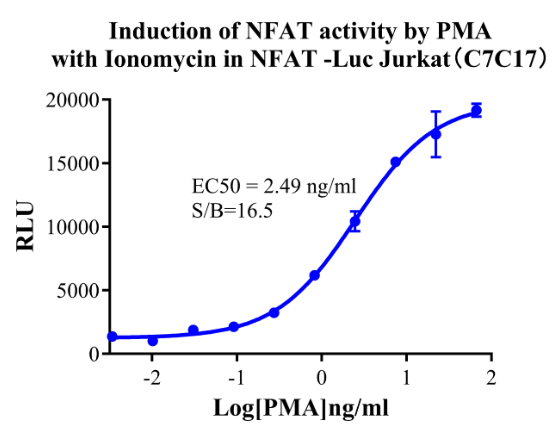
Figure 3.Detect Luciferase assay by Ultra Luciferase Detection Kit RQPH0001(we strongly suggest to purchase from Reqbio). Induction of NFAT activity by PMA with Ionomycin in NFAT-Luc Jurkat(C7C17).
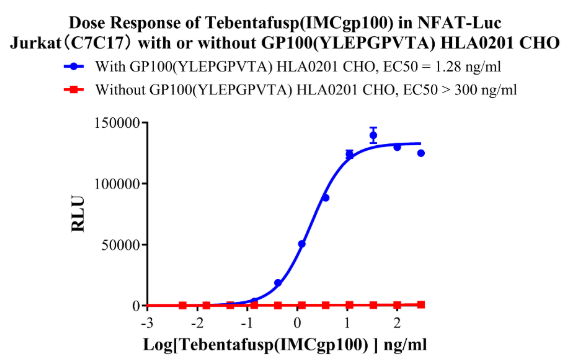
Figure 4.Dose Response of Tebentafusp (IMCgp100) in NFAT-Luc Jurkat(C7C17) with or without GP100(YLEPGPVTA) HLA0201 CHO.
2.HEK293 Human NFAT-Luc(Cat No.RQP74028)
- Application Scenarios: High-throughput screening and signaling pathway research.
- Key Features: Stable expression of the NFAT reporter gene with highly sensitive response to cellular stimulation complexes.
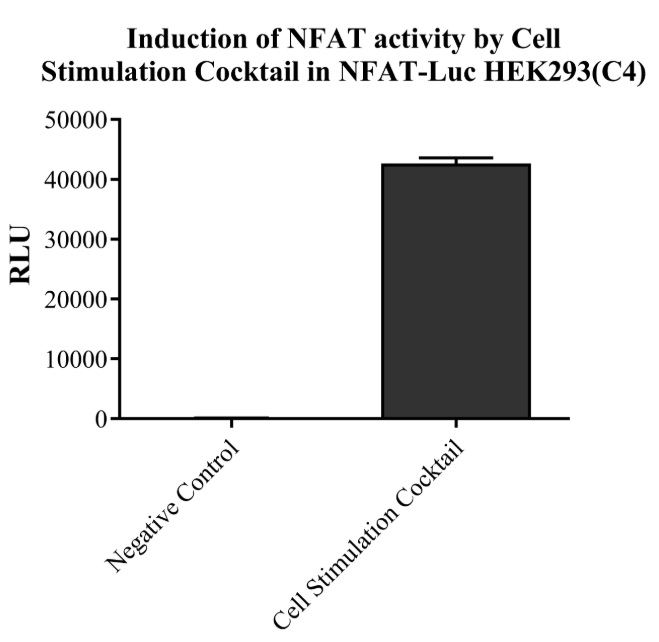
Figure 5. Induction NFAT activity by Cell Stimulation Cocktail in NFAT-Luc HEK293(C4).
3. THP-1 Human NFAT-Luc (Cat No. RQPB0003)
- Application Scenarios: Monocyte/macrophage-related immunology research and inflammatory disease modeling.
- Key Advantage: Study NFAT regulatory mechanisms specifically within a myeloid cell background.
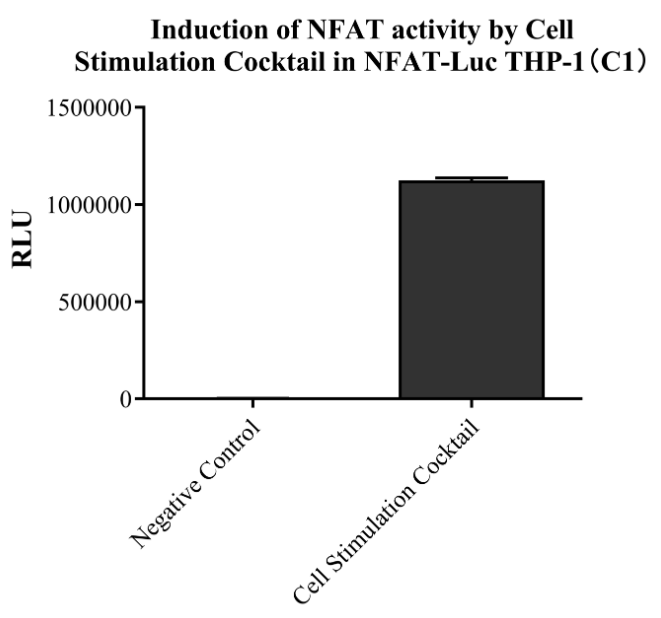
Figure 6. Induction of NFAT activity by Cell Stimulation Cocktail in NFAT-Luc THP-1(C1).
4. CHO-K1 Human NFAT-Luc (Cat No. RQPB0020)
- Application Scenarios: Biopharmaceutical process optimization and stable expression system development.
- Validation: Verified with PMA/Ionomycin cocktail, demonstrating stable and reliable reporter gene activation.
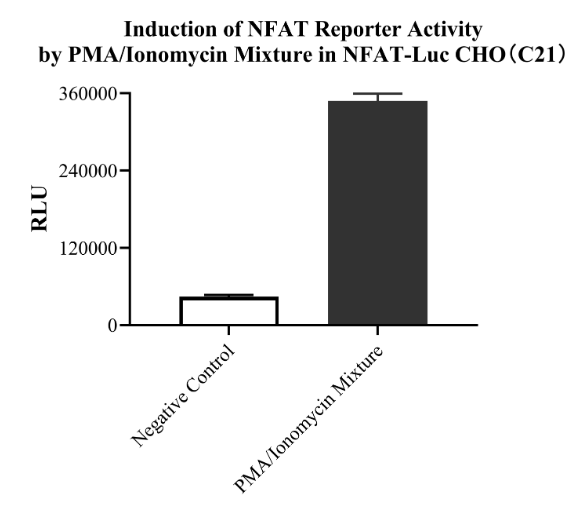
Figure 7. Induction of NFAT Reporter Activity by PMA/Ionomycin Mixture in NFAT-Luc CHO(C21).
Technical Advantages of Reqbio NFAT Cell Models
1. High Mechanistic Relevance: The reporter gene is directly regulated by NFAT response elements, providing a true reflection of signaling pathway activity.
2. Diverse Cellular Backgrounds: Includes multiple physiologically relevant cell types, such as T-cells, epithelial cells, and monocytes.
3. Proven Stability: Each model undergoes rigorous validation to ensure high experimental reproducibility and reliability.
4. Integrated Detection Solutions: For optimal results, we recommend using the Reqbio Ultra Luciferase Detection Kit (Cat No. RQPH0001).
Clinical and R&D Significance of NFAT-Targeted Therapies
Immunomodulatory Applications
NFAT inhibitors have established applications in autoimmune diseases and organ transplantation. The development of novel, selective NFAT modulators promises enhanced efficacy and improved safety profiles.
Oncology Prospects
Given NFAT's dual role in the tumor microenvironment—specifically in regulating immune cell function and malignant cellular characteristics—targeting NFAT is poised to become a novel strategy for cancer immunotherapy.
Cardiovascular and Neurological Diseases
The critical roles of NFAT signaling in cardiac development and neuronal differentiation provide potential new targets for treating related disorders.
Why Choose Reqbio NFAT Cell Models?
Reqbio is dedicated to providing high-quality signaling pathway research tools for global drug R&D institutions. Our NFAT reporter gene cell models offer:
- Rigorous Functional Validation
- Professional Technical Support
- Comprehensive R&D Support
For more information on NFAT cell models or to request product materials, please contact the Reqbio Technical Team.


news recommendation
CaSR: The Calcium Homeostasis Sentinel and a Core GPCR Target for Metabolic and Kidney Disease Research
CD3E: The T-Cell Activation Switch and Cell Models for Targeted Therapeutics
TSHR Cell Model for Thyroid Cancer Drug Screening | GPCR Assay Platform-Reqbio
We Are Pleased to Announce: Global Commercial Licensing Rights for Jurkat E6.1, CHO-K1, HEK293, THP-1 and RAJI Cell Lines Officially Secured.
Explore