
Raji Human CD20 KO Luc Cell
Cat. No: RQP74548
Size: 1 vial of frozen cells (>1E6 per vial in 1 mL)
Unit Price: Contact For Pricing
Product Info
Description
Biological Information
Cell Culture
| Cat. No | RQP74548 |
| Product Name | Raji Human CD20 KO Luc Cell |
| Product Type | Expression Cell line |
| Culture Properties | Suspension |
| Stability | 32passages (in-house test, that not means the cell line will be instable beyond the passages we tested.) |
| Mycoplasma Status | Negative |
| Culture Medium | RPMI-1640+10%FBS +1 μg/ml Puromycin |
| Freeze Medium | 90% FBS+10% DMSO |
| Storage Conditions | Liquid nitrogen immediately upon delivery |
| Application | Binding Assay,FACS |
For research use only. Not intended for human or animal clinical trials, therapeutic or diagnostic use.
The CD20 gene is located in the 11q12 region of human chromosome 11 and encodes a transmembrane phosphoprotein with a molecular weight of approximately 33–37 kDa. It is primarily expressed during the mature stages of B-lymphocyte development (ranging from pre-B cells to pre-plasma cells). This protein consists of four transmembrane domains and two extracellular loops; while its intracellular segment lacks enzymatic activity, it participates in regulating B-cell receptor signaling and calcium influx—specifically by forming homotetramers—thereby playing a pivotal role in the processes of B-cell activation, proliferation, and differentiation. The CD20 protein is specifically expressed within the B-cell lineage (with the exception of plasma cells), rendering it a critical therapeutic target for B-cell malignancies. Furthermore, CD20-targeted therapies have demonstrated potential utility in the treatment of autoimmune diseases (such as rheumatoid arthritis and multiple sclerosis), and the mechanisms governing its expression regulation remain a focal point of current immunological research.
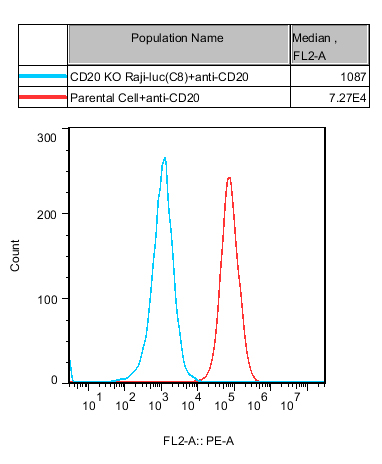
Figure 1. CD20 KO Luc Raji cells are derived from Raji-Luc cells through the stable knockout of human CD20.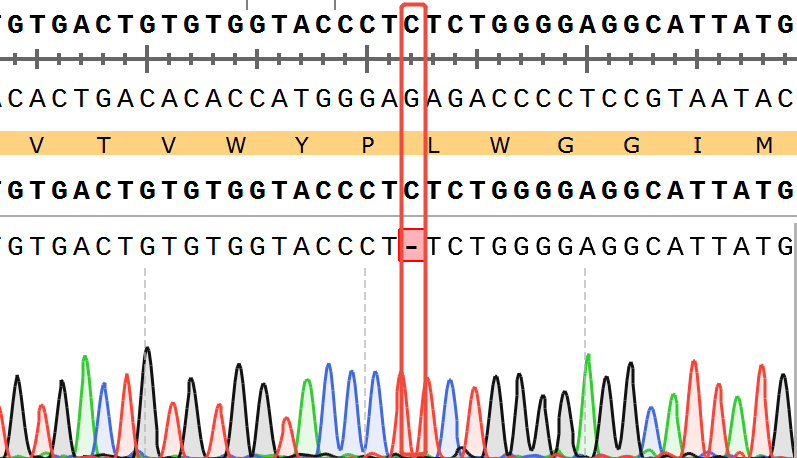
Figure 2. Sanger of Raji Human CD20 KO Luc Cell, chr11-60463104-C (MS4A1:p.L88Sfs*30) MS4A1(NM_021950.4): c.262del C.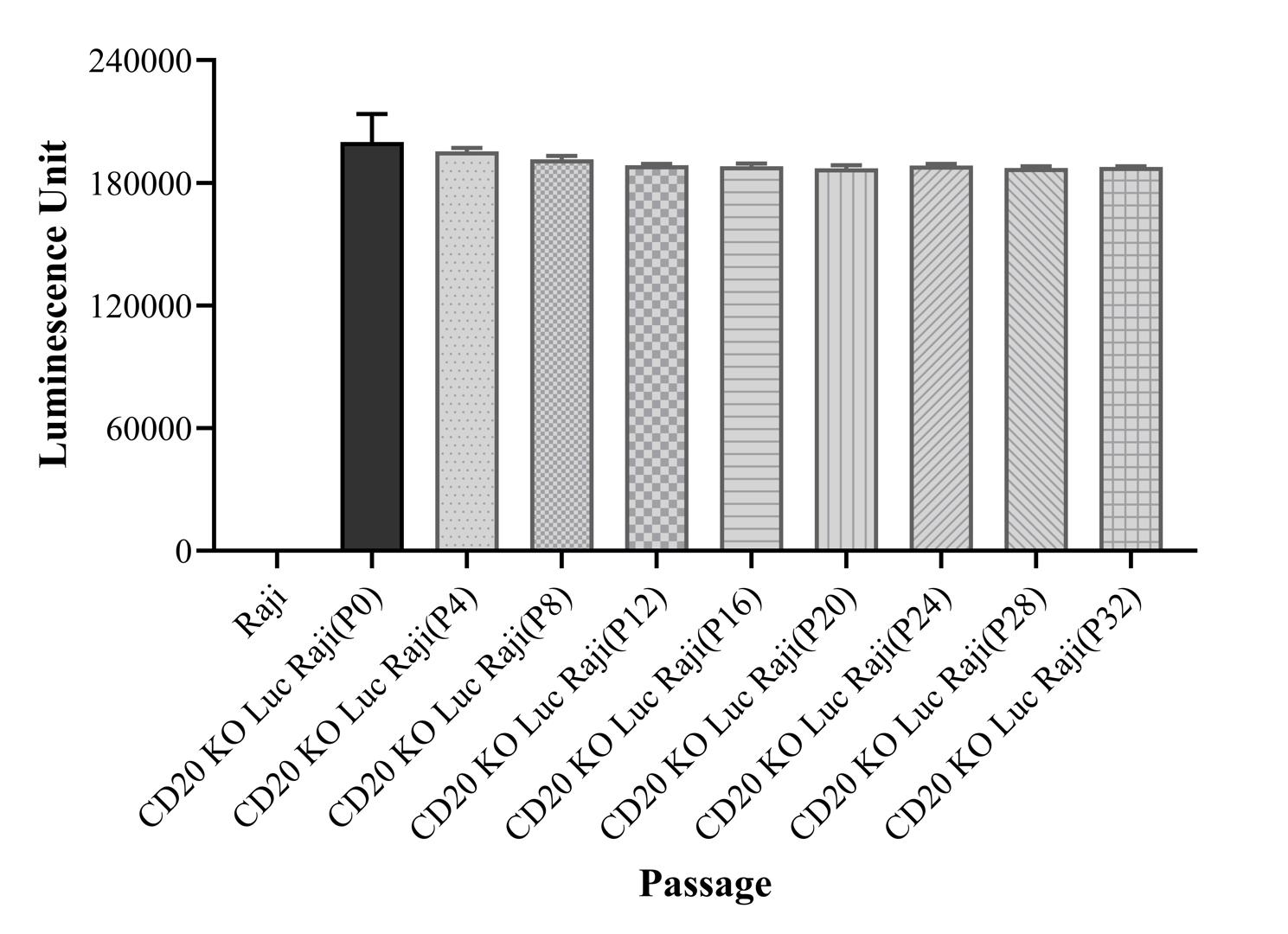
Figure 3. CD20 KO Luc Raji Cells: Luciferase Validation Results. Detect Luciferase assay by Ultra Luciferase Detection Kit RQPH0001.
| Classification | TAA |
| Family | Immunoglobulin superfamily (IgSF) |
| Gene Name | MS4A1 |
| Gene Aliases | CD20, B1, Bp35, FMC7 |
| Gene ID | 931 |
| Accession Number | NM_152866.3 |
| UniProt Number | P11836 |
| Protein Name | B-lymphocyte antigen CD20 |
| Protein Aliases | B-lymphocyte surface antigen B1;Bp35;Leukocyte surface antigen Leu-16;Membrane-spanning 4-domains subfamily A member 1 |
| Target Species | Human |
| Host cell | Raji |
Cell Resuscitation
1)Rapidly thaw the frozen cells in a 37 °C water bath for approximately 60 seconds. Once thawed (which may take slightly less or more than 60 seconds), immediately transfer the cell suspension from the cryovial into a 15 mL centrifuge tube containing 10 mL of pre-warmed Raji Human CD20 KO Luc Cell complete culture medium.
2)Centrifuge cells at 1000 rpm for 5 min to remove medium, then resuspend cells in 5 mL of pre-warmed complete medium.
3)Transfer the cell suspension into a T25 culture flask and incubate at 37 °C with 5% CO₂.
4)After approximately 24–36 hours, replace the medium or passage the cells to remove non-adherent dead cells.
Subculturing procedure
1)When the cell density reaches the appropriate confluency for passaging, wash the cells with PBS, then add 1 mL trypsin to detach the cells. When more than 80% of the cells detach upon gently tapping the culture flask, add complete culture medium to terminate digestion. Gently pipette to obtain a single-cell suspension, transfer to a 15 mL centrifuge tube, and centrifuge at 1000 rpm for 5 minutes.
2)Discard supernatant after centrifugation. Resuspend cells in fresh medium to a single-cell suspension and transfer to a new culture flask for continued growth.
Cell Freezing
After trypsinization and centrifugation of cells from each T75 flask or 10 cm culture dish, discard the supernatant. Add 2 mL of cryopreservation medium (90% FBS + 10% DMSO), gently resuspend thoroughly, and aliquot into two cryovials. Immediately place the cryovials into a controlled-rate freezing container (e.g., Nalgene 5100-0001), fill with isopropanol to the indicated level, and store at −80 °C. After 24 hours, transfer the cryovials to liquid nitrogen for long-term storage.
Related products
CHO-K1 Human NTSR2 Cell Line
CHO-K1 Human CCR4 Cell Line
HEK293 Human NK1R CRE-Luc Cell Line
Raji-Luc-GFP
Jurkat E6.1-Luc
THP-1-GFP
Raji-GFP
Raji-Luc
Jurkat E6.1-GFP
HEK293 Human GAL4-Luc Cell
We Are Pleased to Announce: Global Commercial Licensing Rights for Jurkat E6.1, CHO-K1, HEK293, THP-1 and RAJI Cell Lines Officially Secured.
Explore