

HEK293 Human 5-HTR2A Cell Line
Cat. No: RQP71555
Size: 1 vial of frozen cells (>1E6 per vial in 1 mL)
Unit Price: Contact For Pricing
Description
Product Info
Biological Information
Assay Data
Cell Culture
This product is a HEK293 stable cell line that stably expresses tag-free full-length human 5-HTR2A receptor. Upon agonist binding to 5-HTR2A, the Gq-type G protein signaling pathway is activated, stimulating PLC and triggering an increase in intracellular Ca²⁺ and IP1 concentration. Therefore, receptor activity can be easily quantified in live cells in a dose-response manner by measuring changes in Ca²⁺ or IP1 levels. The cell line has been functionally validated with positive agonists. It is suitable for high-throughput screening (HTS) and receptor functional evaluation assays.
Assay Principle
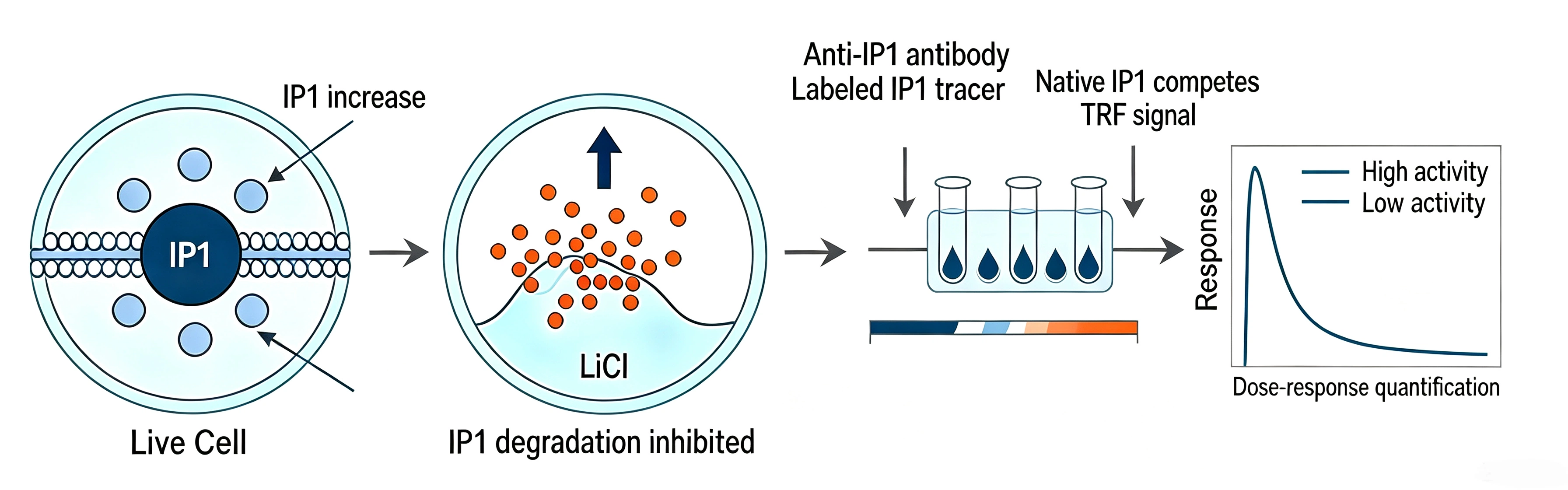
This schematic illustrates the principle of the IP1 time-resolved fluorescence assay for Gq-coupled GPCR functional detection. Upon agonist stimulation of live cells, activated Gq signaling elevates intracellular IP1 levels. Lithium chloride (LiCl) blocks IP1 degradation to accumulate the second messenger. Endogenous IP1 from stimulated cells competes with labeled IP1 tracer for binding to anti-IP1 antibody. The resulting time-resolved fluorescence signal is measured to generate dose-response curves for quantification of receptor activity.
| Cat. No | RQP71555 |
| Product Name | HEK293 Human 5-HTR2A Cell Line |
| Engineering method | plasmid transfection |
| Culture Properties | Adherent |
| Stability | 32passages (in-house test, that not means the cell line will be instable beyond the passages we tested.) |
| Mycoplasma Status | Negative |
| Culture Medium | DMEM+10%FBS+2 μg/ml Puromycin |
| Freeze Medium | 90% FBS+10% DMSO |
| Storage Conditions | Liquid nitrogen immediately upon delivery |
| Transducer | Gq |
| Application | Functional assay for 5-HTR2A Receptor |
| Safety Precautions |
Wear lab coat, disposable gloves to avoid direct sample contact. For spills: apply disinfectant, allow full inactivation, then clean up. |
For research use only. Not intended for human or animal clinical trials, therapeutic or diagnostic use.
| Target Class | GPCR |
| Family | 5-hydroxytryptamine receptors |
| Sub Family | Class A(Rhodopsin) |
| Gene Name | HTR2A |
| Gene Aliases | 5-hydroxytryptamine receptor 2A,5-HT2A,5-HT2,HTR2 |
| Gene ID | 3356 |
| Accession Number | NM_000621 |
| UniProt Number | P28223 |
| Protein Name | 5-HT-2;5-HT-2A |
| Protein Aliases | Serotonin receptor 2A |
| Target Species | Human |
| Host cell | HEK293 |
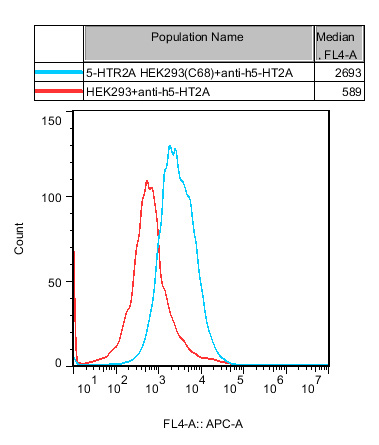
Figure 1. Recombinant HEK293 Human 5-HTR2A stably expressing 5-HTR2A
The recombinant HEK293 human 5-HTR2A cell line was validated for stable surface expression by flow cytometry. Staining with an anti-5-HT2A antibody produced a fluorescence median of 2693 for 5-HTR2A HEK293(C68), compared with 589 for parental HEK293 control, confirming stable expression of human 5-HTR2A receptor on cell membrane.
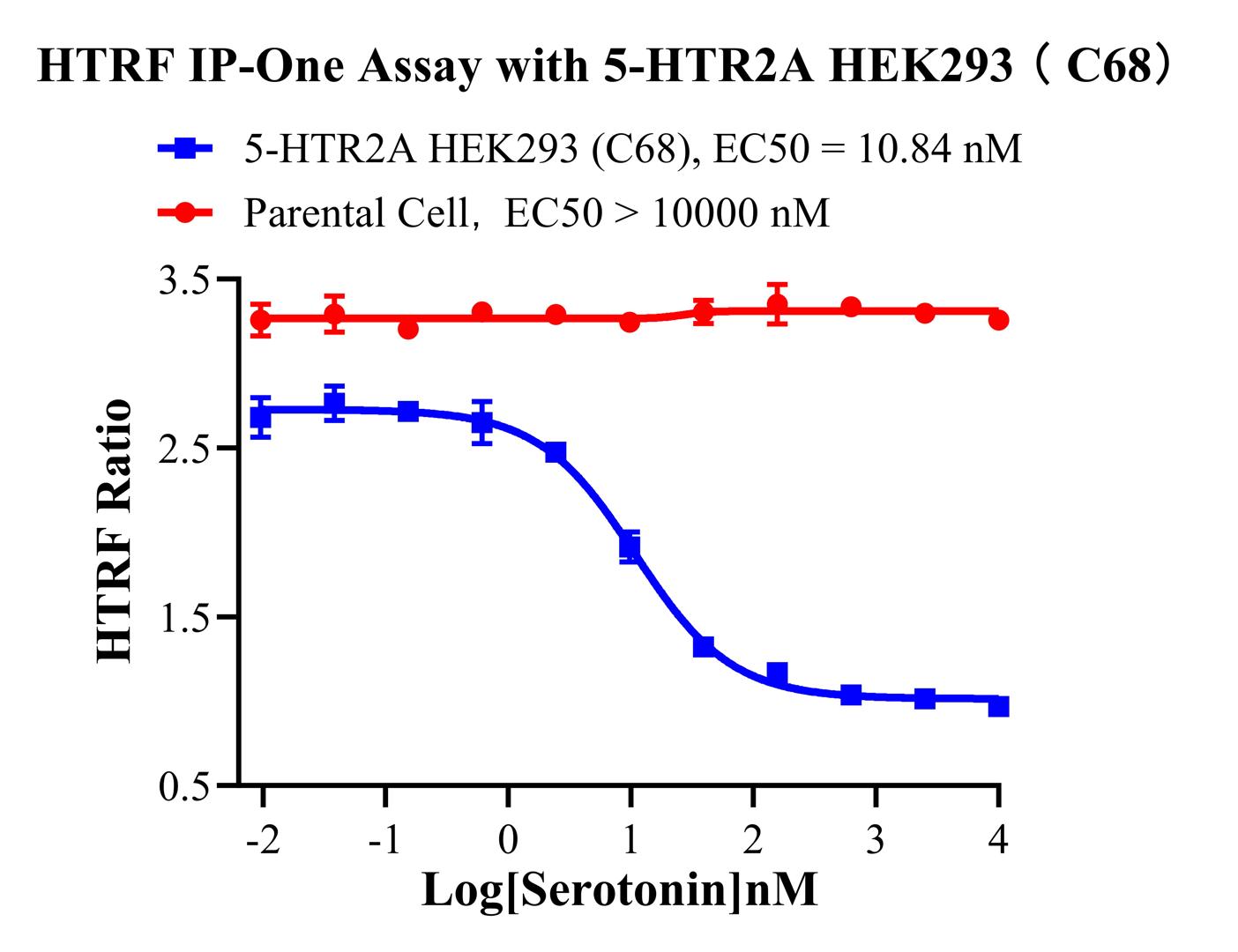
Figure 2. HTRF IP-One Assay with HEK293 Human 5-HTR2A (C68)
The 5-HTR2A HEK293(C68) cell line was functionally verified via HTRF IP-One assay. Serotonin triggers dose-dependent IP1 accumulation through Gq-coupled 5-HTR2A signaling, with EC50 = 10.84 nM. The parental HEK293 cells showed no response (EC50>10000 nM), demonstrating specific receptor activity, suitable for high-throughput screening and batch QC testing.
Cell Resuscitation
1)Rapidly thaw the frozen cells in a 37 °C water bath for approximately 60 seconds. Once thawed (which may take slightly less or more than 60 seconds), immediately transfer the cell suspension from the cryovial into a 15 mL centrifuge tube containing 10 mL of pre-warmed HEK293 Human 5-HTR2A Cell Line complete culture medium.
2)Centrifuge cells at 1000 rpm for 5 min to remove medium, then resuspend cells in 5 mL of pre-warmed complete medium.
3)Transfer the cell suspension into a T25 culture flask and incubate at 37 °C with 5% CO₂.
4)After approximately 24–36 hours, replace the medium or passage the cells to remove non-adherent dead cells.
Subculturing procedure
1)When the cell density reaches the appropriate confluency for passaging, wash the cells with PBS, then add 1 mL trypsin to detach the cells. When more than 80% of the cells detach upon gently tapping the culture flask, add complete culture medium to terminate digestion. Gently pipette to obtain a single-cell suspension, transfer to a 15 mL centrifuge tube, and centrifuge at 1000 rpm for 5 minutes.
2)Discard supernatant after centrifugation. Resuspend cells in fresh medium to a single-cell suspension and transfer to a new culture flask for continued growth.
Cell Freezing
After trypsinization and centrifugation of cells from each T75 flask or 10 cm culture dish, discard the supernatant. Add 2 mL of cryopreservation medium (90% FBS + 10% DMSO), gently resuspend thoroughly, and aliquot into two cryovials. Immediately place the cryovials into a controlled-rate freezing container (e.g., Nalgene 5100-0001), fill with isopropanol to the indicated level, and store at −80 °C. After 24 hours, transfer the cryovials to liquid nitrogen for long-term storage.
Related products
CHO-K1 Human NTSR2 Cell Line
CHO-K1 Human CCR4 Cell Line
HEK293 Human NK1R CRE-Luc Cell Line
Raji-Luc-GFP
Jurkat E6.1-Luc
THP-1-GFP
Raji-GFP
Raji-Luc
Jurkat E6.1-GFP
HEK293 Human GAL4-Luc Cell
We Are Pleased to Announce: Global Commercial Licensing Rights for Jurkat E6.1, CHO-K1, HEK293, THP-1 and RAJI Cell Lines Officially Secured.
Explore