
IL18 Effector Reporter Cell(Adherent) Cell
Cat. No: RQP74512
Size: 1 vial of frozen cells (>1E6 per vial in 1 mL)
Unit Price: Contact For Pricing
Product Info
Description
Biological Information
Assay Data
Cell Culture
| Cat. No | RQP74512 |
| Product Name | IL18 Effector Reporter Cell(Adherent) Cell |
| Product Type | Reporter Cell |
| Culture Properties | Adherent |
| Stability | 32passages (in-house test, that not means the cell line will be instable beyond the passages we tested.) |
| Mycoplasma Status | Negative |
| Culture Medium | MEM +10%FBS + 1% NEAA + 1 mM NaP + 1μg/ml Puromycin + 5μg/ml Blsaticidin+ 100 μg/ml Hygromycin B |
| Freeze Medium | 90% FBS+10% DMSO |
| Storage Conditions | Liquid nitrogen immediately upon delivery |
| Application | Functional(Report Gene) Assay |
For research use only. Not intended for human or animal clinical trials, therapeutic or diagnostic use.
The IL-1 family comprises 11 cytokines, consisting of 7 ligands with agonist activity (IL-1α, IL-1β, IL-18, IL-33, IL-36α, IL-36β, and IL-36γ) and 4 members with antagonist activity [IL-1 Receptor Antagonist (IL-1Ra), IL-36Ra, IL-37, and IL-38]. IL-1α, IL-1β, IL-18, IL-33, IL-36α, IL-36β, and IL-36γ trigger the activation of MKKs and NF-κB, thereby inducing an inflammatory response.
Upon its release, mature IL-18 initiates signal transduction primarily by binding to receptor complexes located on the surface of target cells. It first binds to the IL-18 receptor α-chain (IL-18Rα) and subsequently recruits the IL-18 receptor β-chain (IL-18Rβ) to form a heterotrimeric complex; this process predominantly occurs in immune cells, such as T cells and NK cells. By recruiting the adaptor protein MyD88, this complex ultimately activates key signaling pathways—such as NF-κB and MAPK—thereby inducing the expression of inflammation-related genes. To prevent excessive inflammatory responses, the human body possesses a highly efficient "braking" system: the IL-18 binding protein (IL-18BP). This protein captures free IL-18 with extremely high affinity, thereby blocking its binding to receptors and precisely regulating the biological activity of IL-18.
The IL-18 Effector Reporter Cell (Adherent) is a recombinant cell line that stably expresses human IL-18Rα and human IL-18Rβ, and in which a reporter gene is expressed under the control of specific regulatory elements.
The IL-18 Effector Reporter Cell (Adherent) reporter gene-based drug target model accurately mimics the in vivo signal transduction process of IL-18; the underlying principle is illustrated in the figure below.
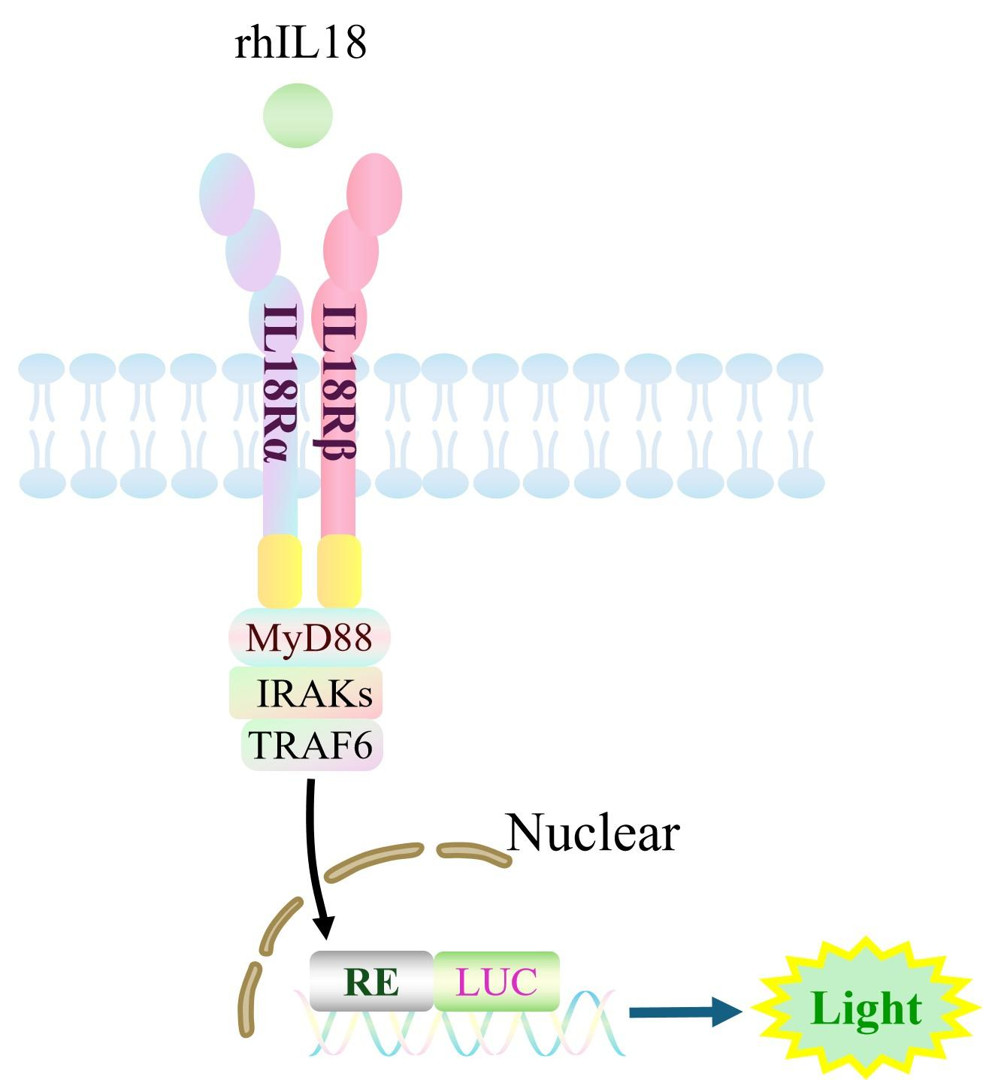
Figure 1. Schematic Diagram of the IL18 Effector Reporter Cell(Adherent) Cell Model
| Classification | Cytokine&Growth Factor |
| Family | Interleukin-1 Receptor Family |
| Gene Name | IL18R1 |
| Gene Aliases | IL1RRP;IL-1Rrp;CD218a |
| Gene ID | 8809 |
| Accession Number | NM_003855.5 |
| UniProt Number | Q13478 |
| Protein Name | IL-18R-1; IL-18R1 |
| Protein Aliases | CD218 antigen-like family member A;CDw218a;IL1 receptor-related protein (IL-1Rrp; IL1R-rp);IL-18R-alpha; IL-18Ralpha |
| Target Species | Human |
| Host cell | HEK293 |
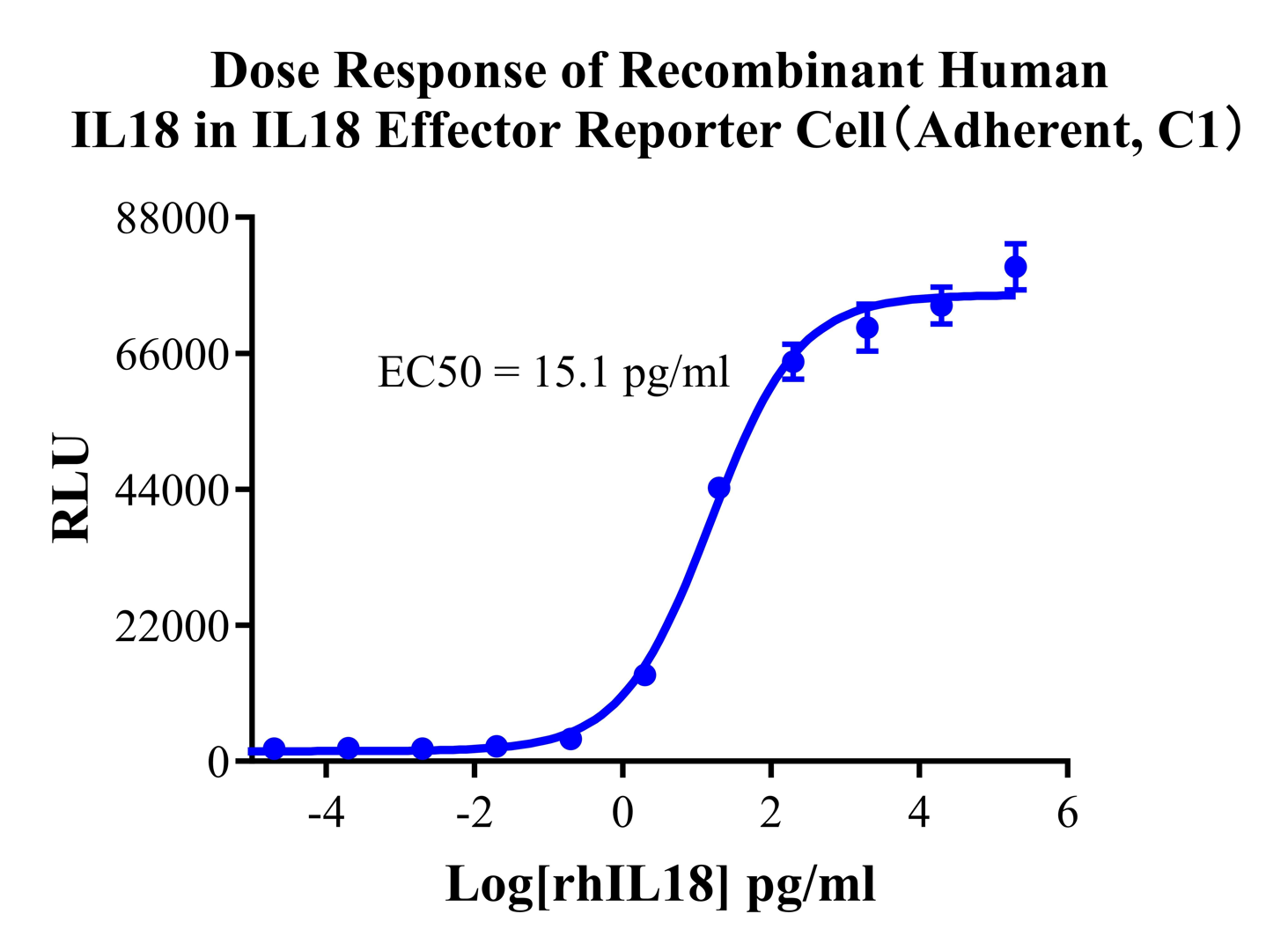
Figure 2. Dose Response of Recombinant Human IL18 in IL18 Effector Reporter Cell(Adherent, C1).
Cell Resuscitation
1)Rapidly thaw the frozen cells in a 37 °C water bath for approximately 60 seconds. Once thawed (which may take slightly less or more than 60 seconds), immediately transfer the cell suspension from the cryovial into a 15 mL centrifuge tube containing 10 mL of pre-warmed IL18 Effector Reporter Cell(Adherent) Cell complete culture medium.
2)Centrifuge cells at 1000 rpm for 5 min to remove medium, then resuspend cells in 5 mL of pre-warmed complete medium.
3)Transfer the cell suspension into a T25 culture flask and incubate at 37 °C with 5% CO₂.
4)After approximately 24–36 hours, replace the medium or passage the cells to remove non-adherent dead cells.
Subculturing procedure
1)When the cell density reaches the appropriate confluency for passaging, wash the cells with PBS, then add 1 mL trypsin to detach the cells. When more than 80% of the cells detach upon gently tapping the culture flask, add complete culture medium to terminate digestion. Gently pipette to obtain a single-cell suspension, transfer to a 15 mL centrifuge tube, and centrifuge at 1000 rpm for 5 minutes.
2)Discard supernatant after centrifugation. Resuspend cells in fresh medium to a single-cell suspension and transfer to a new culture flask for continued growth.
Cell Freezing
After trypsinization and centrifugation of cells from each T75 flask or 10 cm culture dish, discard the supernatant. Add 2 mL of cryopreservation medium (90% FBS + 10% DMSO), gently resuspend thoroughly, and aliquot into two cryovials. Immediately place the cryovials into a controlled-rate freezing container (e.g., Nalgene 5100-0001), fill with isopropanol to the indicated level, and store at −80 °C. After 24 hours, transfer the cryovials to liquid nitrogen for long-term storage.
Related products
CHO-K1 Human NTSR2 Cell Line
CHO-K1 Human CCR4 Cell Line
HEK293 Human NK1R CRE-Luc Cell Line
Raji-Luc-GFP
Jurkat E6.1-Luc
We Are Pleased to Announce: Global Commercial Licensing Rights for Jurkat E6.1, CHO-K1, HEK293, THP-1 and RAJI Cell Lines Officially Secured.
ExploreWe Are Pleased to Announce: Global Commercial Licensing Rights for Jurkat E6.1, CHO-K1, HEK293, THP-1 and RAJI Cell Lines Officially Secured.
Explore