
HEK293 Human STAT6-Luc Reporter Cell
Cat. No: RQPB0008
Size: 1 vial of frozen cells (>1E6 per vial in 1 mL)
Unit Price: Contact For Pricing
Product Info
Description
Assay Data
Cell Culture
| Cat. No | RQPB0008 |
| Product Name | HEK293 Human STAT6-Luc Reporter Cell |
| Product Type | Reporter Cell |
| Culture Properties | Adherent |
| Stability | 32passages (in-house test, that not means the cell line will be instable beyond the passages we tested.) |
| Mycoplasma Status | Negative |
| Culture Medium | DMEM+10%FBS+2μg/ml puromycin+100μg/ml Hygromycin B |
| Freeze Medium | 90% FBS+10% DMSO |
| Storage Conditions | Liquid nitrogen immediately upon delivery |
For research use only. Not intended for human or animal clinical trials, therapeutic or diagnostic use.
The JAK/STAT signaling pathway serves as one of the central communication hubs for cellular function. It is implicated in the activity of over 50 cytokines and growth factors—including hormones, interferons (IFNs), interleukins (ILs), and colony-stimulating factors—regulating processes such as hematopoiesis, adaptive immunity, tissue repair, inflammation, apoptosis, and adipogenesis, as well as the pathogenesis of associated diseases.
STAT6 is a transcription factor frequently found to be hyperactivated in follicular lymphoma, primary mediastinal large B-cell lymphoma (PMBCL), and classical Hodgkin lymphoma (cHL). The canonical STAT6 signaling pathway is initiated by the binding of IL-4 or IL-13 to their respective receptors, thereby enabling receptor autophosphorylation. This phosphorylation event creates a docking site for the SH2 domain of STAT6 and recruits JAK proteins, which subsequently phosphorylate STAT6 at the Tyr641 residue. Upon phosphorylation, STAT6 undergoes homodimerization and translocates to the nucleus, where it binds to DNA and functions as a transcriptional activator or repressor. Once activated, STAT6 plays a pivotal role in the function of immune cells under both physiological and pathological conditions.
The STAT6-Luc HEK293 reporter cell line consists of HEK293 cells engineered to express a luciferase (Luc) reporter gene under the transcriptional control of STAT6. The principle by which IL-4 binding to its receptor activates STAT6 is illustrated in the figure below.
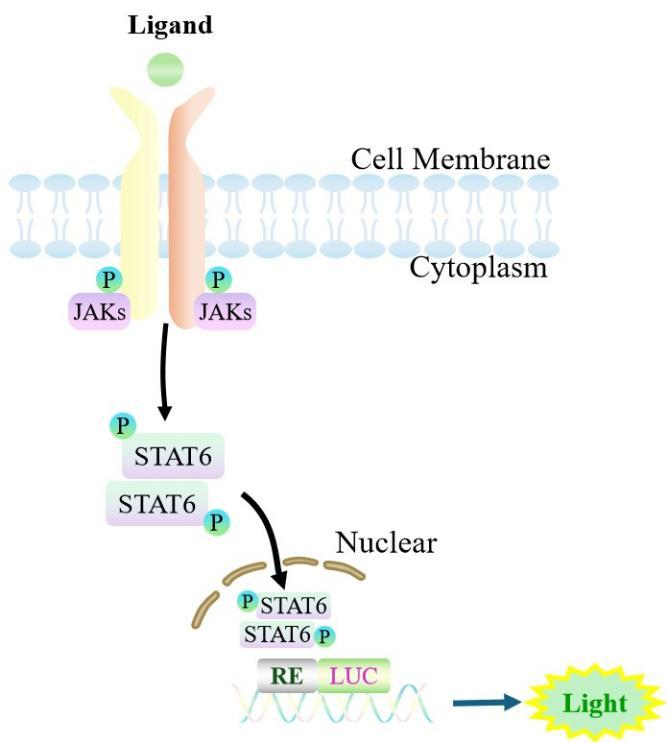
Figure 1. Schematic Diagram of the STAT6-Luc HEK293 Principle
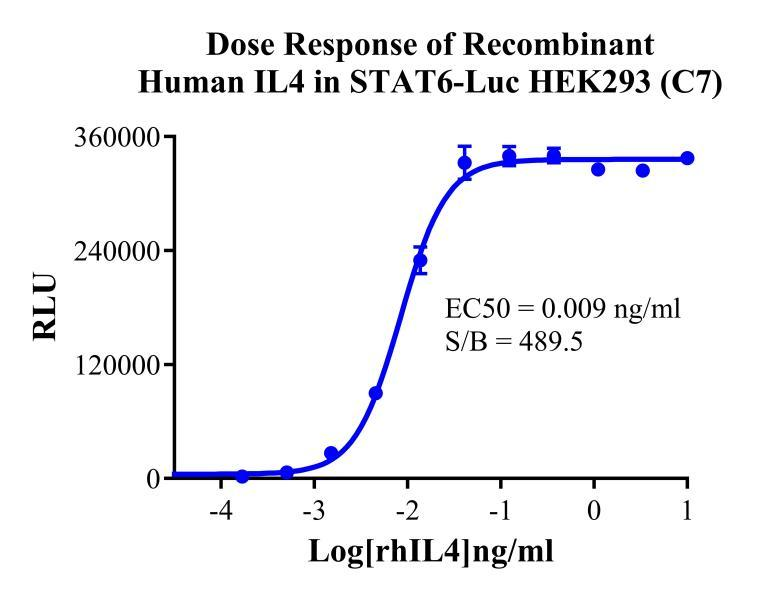
Figure 2. Dose Response of Recombinant Human IL4 in STAT6-Luc HEK293 (C7).
Cell Resuscitation
1)Rapidly thaw the frozen cells in a 37 °C water bath for approximately 60 seconds. Once thawed (which may take slightly less or more than 60 seconds), immediately transfer the cell suspension from the cryovial into a 15 mL centrifuge tube containing 10 mL of pre-warmed HEK293 Human STAT6-Luc Reporter Cell complete culture medium.
2)Centrifuge cells at 1000 rpm for 5 min to remove medium, then resuspend cells in 5 mL of pre-warmed complete medium.
3)Transfer the cell suspension into a T25 culture flask and incubate at 37 °C with 5% CO₂.
4)After approximately 24–36 hours, replace the medium or passage the cells to remove non-adherent dead cells.
Subculturing procedure
1)When the cell density reaches the appropriate confluency for passaging, wash the cells with PBS, then add 1 mL trypsin to detach the cells. When more than 80% of the cells detach upon gently tapping the culture flask, add complete culture medium to terminate digestion. Gently pipette to obtain a single-cell suspension, transfer to a 15 mL centrifuge tube, and centrifuge at 1000 rpm for 5 minutes.
2)Discard supernatant after centrifugation. Resuspend cells in fresh medium to a single-cell suspension and transfer to a new culture flask for continued growth.
Cell Freezing
After trypsinization and centrifugation of cells from each T75 flask or 10 cm culture dish, discard the supernatant. Add 2 mL of cryopreservation medium (90% FBS + 10% DMSO), gently resuspend thoroughly, and aliquot into two cryovials. Immediately place the cryovials into a controlled-rate freezing container (e.g., Nalgene 5100-0001), fill with isopropanol to the indicated level, and store at −80 °C. After 24 hours, transfer the cryovials to liquid nitrogen for long-term storage.
Related products
HEK293 Human NK1R CRE-Luc Cell Line
Raji-Luc-GFP
Jurkat E6.1-Luc
THP-1-GFP
THP-1-Luc
Raji-GFP
Raji-Luc
Jurkat E6.1-GFP
HEK293 Human GAL4-Luc Reporter Cell
HEK293 Human CRE-Luc Reporter Cell
We Are Pleased to Announce: Global Commercial Licensing Rights for Jurkat E6.1, CHO-K1, and HEK293 Cell Lines Officially Secured.
Explore