
HEK293 Human NFκB-Luc Reporter Cell
Cat. No: RQP74026
Size: 1 vial of frozen cells (>1E6 per vial in 1 mL)
Unit Price: Contact For Pricing
Product Info
Description
Assay Data
Cell Culture
| Cat. No | RQP74026 |
| Product Name | HEK293 Human NFκB-Luc Reporter Cell |
| Product Type | Reporter Cell |
| Culture Properties | Adherent |
| Stability | 32passages (in-house test, that not means the cell line will be instable beyond the passages we tested.) |
| Mycoplasma Status | Negative |
| Culture Medium | MEM + 10% Foetal Bovine Serum (FBS)+ 1% Non Essential Amino Acids (NEAA) + 1mM Sodium Pyruvate (NaP) +100μg/ml Hygromycin B |
| Freeze Medium | 90% FBS+10% DMSO |
| Storage Conditions | Liquid nitrogen immediately upon delivery |
| Application | Functional(Report Gene) Assay |
For research use only. Not intended for human or animal clinical trials, therapeutic or diagnostic use.
Nuclear Factor kappa-light-chain-enhancer of activated B cells (NF-κB) is a family of transcription factor protein complexes that controls DNA transcription, cytokine production, and cell survival. NF-κB is present in almost all animal cell types and participates in cellular responses to stimuli such as stress, cytokines, free radicals, heavy metals, ultraviolet irradiation, oxidized LDL, and bacterial or viral antigens.
The activation of NF-κB involves two major signaling pathways: the canonical pathway and the non-canonical (or alternative) pathway. Although their signaling mechanisms differ, both are crucial for regulating immune and inflammatory responses. The primary mechanism of canonical NF-κB activation involves the inducible degradation of IκBα, triggered by site-specific phosphorylation mediated by the multi-subunit IκB kinase (IKK) complex. In contrast to the canonical NF-κB pathway, the non-canonical NF-κB pathway responds selectively to a specific subset of stimuli—specifically, ligands for certain members of the TNFR superfamily, such as LTβR, BAFFR, CD40, and RANK.
NFκB-Luc HEK293 Reporter Cells are HEK293 cells engineered to express a Luciferase (Luc) reporter gene under the transcriptional control of NFκB. The principle is illustrated in the figure below.
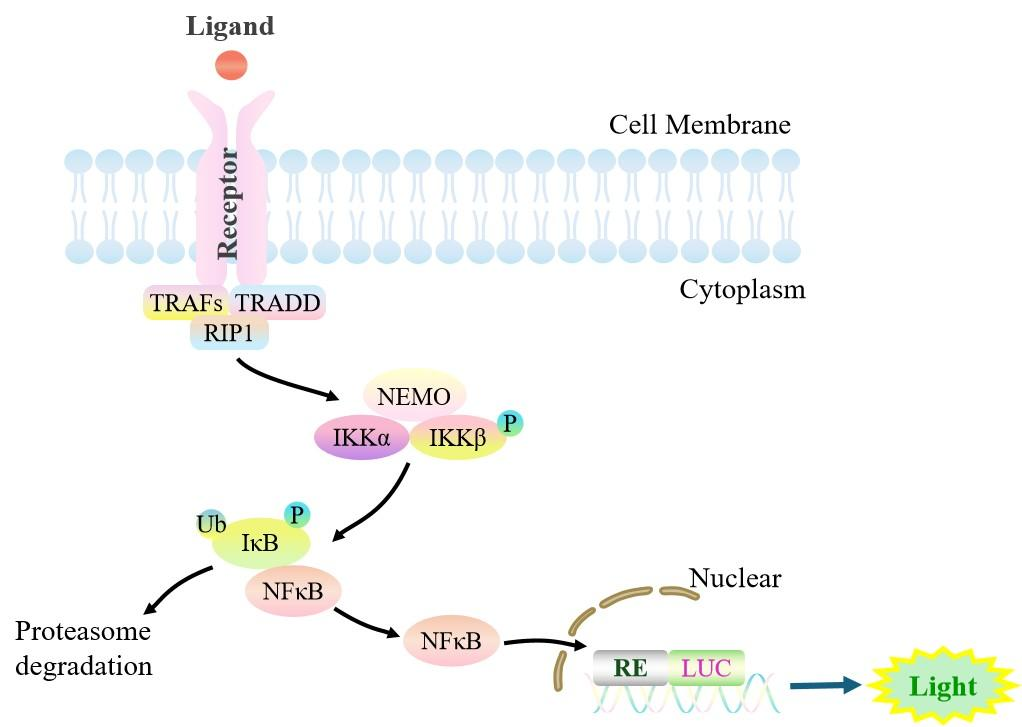
Figure 1. Schematic Diagram of the NFκB-Luc HEK293 Principle
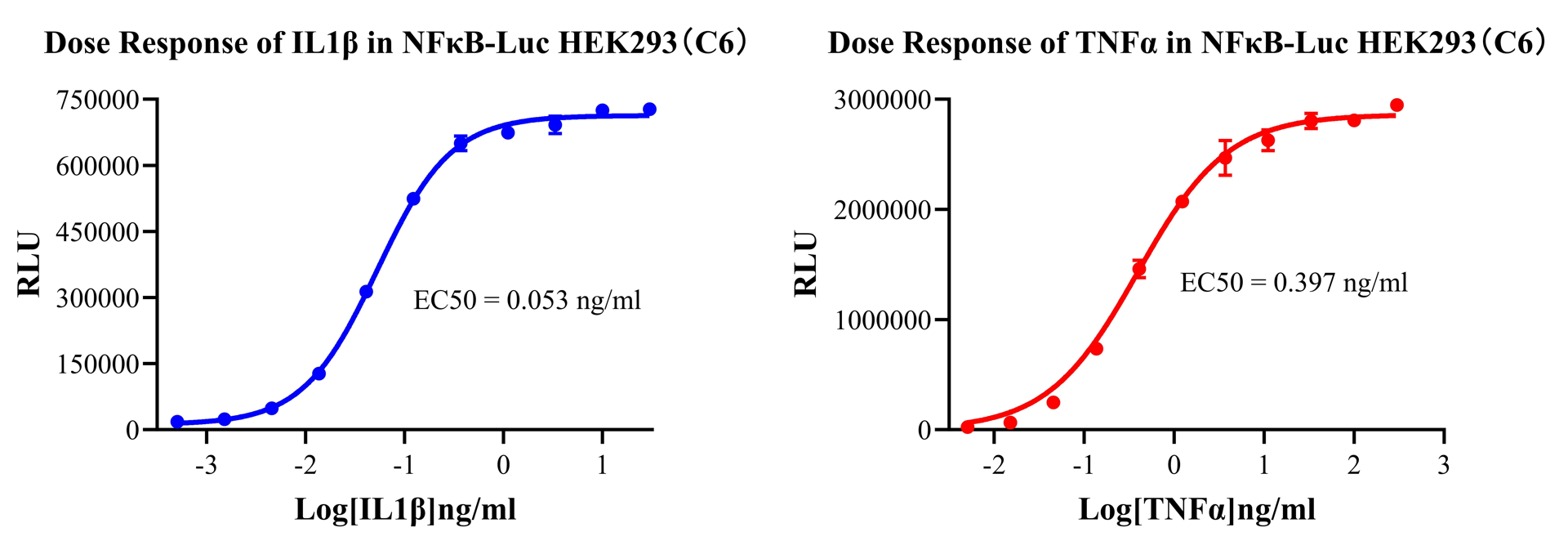
Figure 2.Dose Response of IL1β in NFκB-Luc HEK293(C6) and Dose Response of TNFα in NFκB-Luc HEK293(C6).

Figure 3.Inhibition of hIL1β-induced Reporter Activity by IL1β Neutralization Ab in NFκB-Luc HEK293(C6).Inhibition of hIL1β-induced Reporter Activity by IL1R Blocking Ab in NFκB-Luc HEK293(C6).Inhibition of hIL1β-induced Reporter Activity by IL1RAP Neutralization Ab in NFκB-Luc HEK293(C6).
Cell Resuscitation
1)Rapidly thaw the frozen cells in a 37 °C water bath for approximately 60 seconds. Once thawed (which may take slightly less or more than 60 seconds), immediately transfer the cell suspension from the cryovial into a 15 mL centrifuge tube containing 10 mL of pre-warmed HEK293 Human NFκB-Luc Reporter Cell complete culture medium.
2)Centrifuge cells at 1000 rpm for 5 min to remove medium, then resuspend cells in 5 mL of pre-warmed complete medium.
3)Transfer the cell suspension into a T25 culture flask and incubate at 37 °C with 5% CO₂.
4)After approximately 24–36 hours, replace the medium or passage the cells to remove non-adherent dead cells.
Subculturing procedure
1)When the cell density reaches the appropriate confluency for passaging, wash the cells with PBS, then add 1 mL trypsin to detach the cells. When more than 80% of the cells detach upon gently tapping the culture flask, add complete culture medium to terminate digestion. Gently pipette to obtain a single-cell suspension, transfer to a 15 mL centrifuge tube, and centrifuge at 1000 rpm for 5 minutes.
2)Discard supernatant after centrifugation. Resuspend cells in fresh medium to a single-cell suspension and transfer to a new culture flask for continued growth.
Cell Freezing
After trypsinization and centrifugation of cells from each T75 flask or 10 cm culture dish, discard the supernatant. Add 2 mL of cryopreservation medium (90% FBS + 10% DMSO), gently resuspend thoroughly, and aliquot into two cryovials. Immediately place the cryovials into a controlled-rate freezing container (e.g., Nalgene 5100-0001), fill with isopropanol to the indicated level, and store at −80 °C. After 24 hours, transfer the cryovials to liquid nitrogen for long-term storage.
Related products
HEK293 Human NK1R CRE-Luc Cell Line
Raji-Luc-GFP
Jurkat E6.1-Luc
THP-1-GFP
THP-1-Luc
Raji-GFP
Raji-Luc
Jurkat E6.1-GFP
HEK293 Human GAL4-Luc Reporter Cell
HEK293 Human CRE-Luc Reporter Cell
We Are Pleased to Announce: Global Commercial Licensing Rights for Jurkat E6.1, CHO-K1, and HEK293 Cell Lines Officially Secured.
Explore